How a young entrepreneur builds a social business underground
Florin Teslari did not plan to become a mushroom grower. He has a degree in engineering. And yet here he is: with 24 years of education behind him, working in a limestone mine and taking care of 16 species of exotic mushrooms. His father started growing Pleurotus more than 25 years ago, almost as a challenge after a conversation with friends. Florin spent his childhood preparing mushroom substrate and collecting harvests on weekends. Mushroom cultivation was only part of the picture of his childhood. He never imagined that this process would later become an important part of his life or that he would one day build a social enterprise around it — a path that took shape with the support of the EU4Youth programme.
From pandemic to product
COVID-19 was what changed the equation. When markets closed, the family had to turn directly to supermarkets, and suddenly the business needed labels, packaging, and structure. For the first time, he saw that real demand existed. From there, the idea of mushroom growing kits at home quickly followed. The initial kits were made in eight days — from idea to finished product. The first three were not sold; they were used only for testing. Florin made another fifteen kits the next night, slept very little, but sold them all.
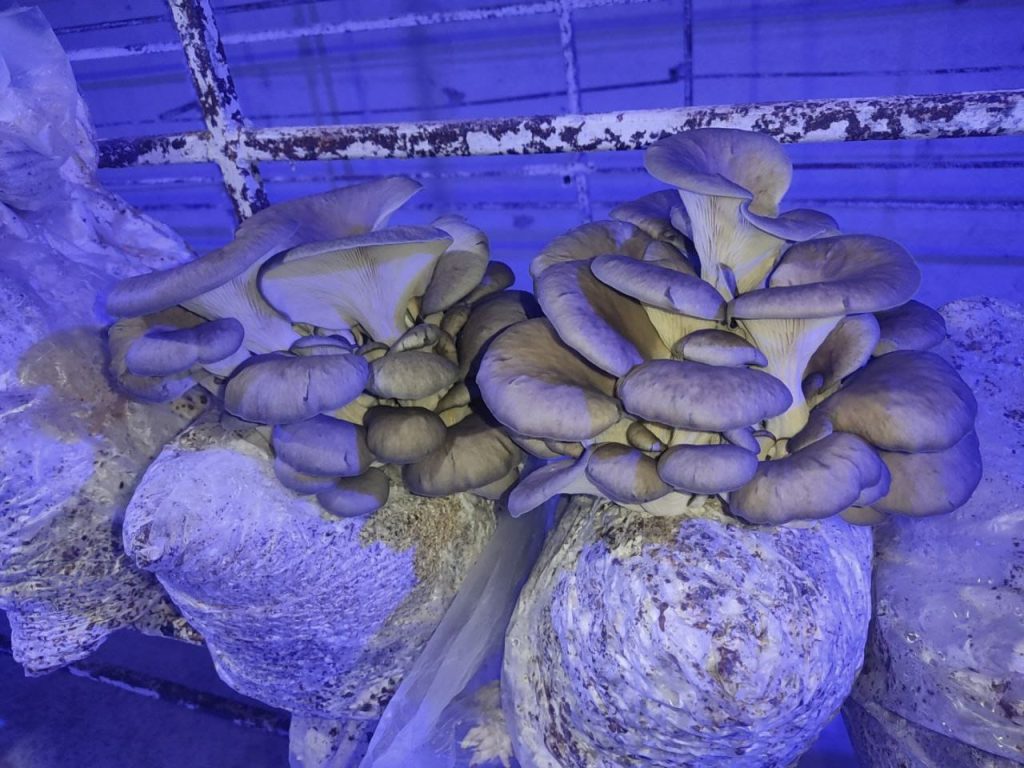
What surprised him most was not the sales. It was people’s reaction — parents and children. He received many messages saying it was fun, interesting, and a great idea. These reactions were unexpected and defined the next direction. A mushroom growing kit, which costs as much as a restaurant meal, teaches children that food can be grown, not just bought. This shift in mindset, multiplied across hundreds of families, is not something to ignore. “People don’t understand that it’s not just about buying mushrooms from the store, but about growing them.” This distinction matters more than it seems and makes the difference between a product and an experience.
A mine and 16 mushroom species
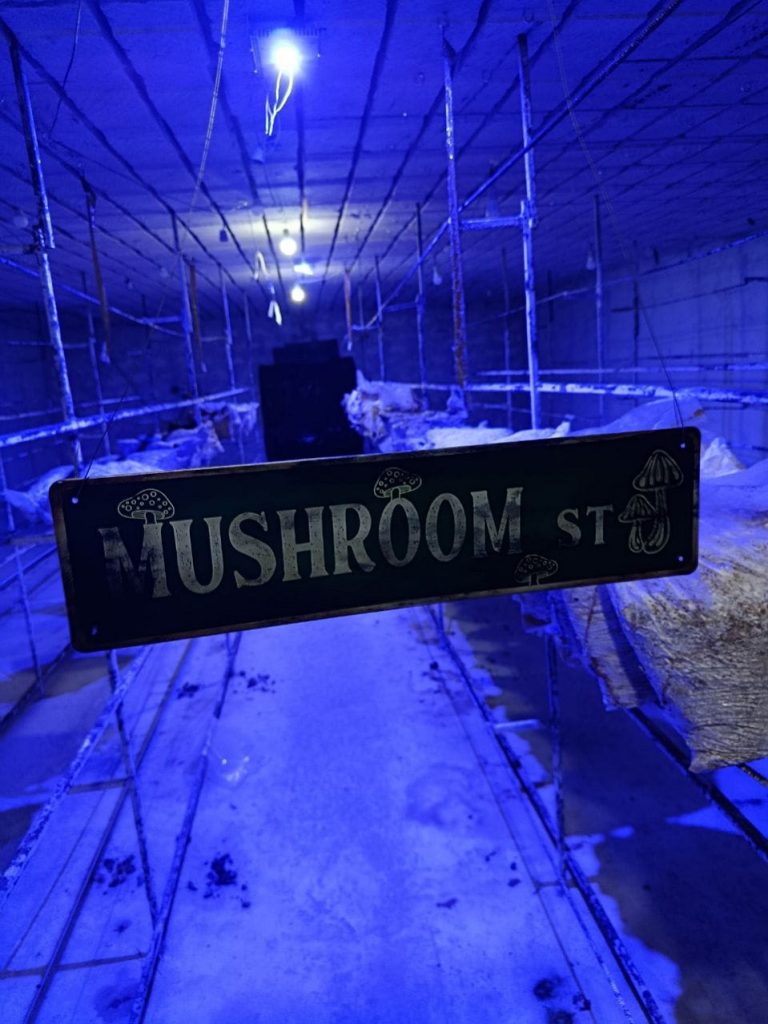
Florin grows his mushrooms in a limestone mine in the village of Făurești — a practical choice that provides perfect conditions. Natural humidity and underground temperature create ideal conditions that would cost a fortune to reproduce artificially. This is exactly the kind of solution that comes from engineering thinking: Florin holds a degree in engineering and in the past two years has developed “Teslari ORIGINS” simultaneously as chief engineer and founder. “I saw this being done in the United States, but the technology there was built for specific conditions — it only worked for exotic species. Nothing similar existed here. So I had no choice but to develop the production technology from scratch,” says Florin.
Currently, Florin Teslari produces 16 species of exotic mushrooms, including Lion’s Mane, Shiitake, and Enoki varieties that are almost absent from the Moldovan market. Home growing kits, fresh mushrooms, dried products, and future dietary supplements made from medicinal fungi are part of a vision Florin is building step by step. He lists his future plans without pausing: biodegradable packaging made from mycelium, certified organic substrates, educational workshops for children, and mine tours where children prepare their own substrate and go home with their own growing kit.
Promo
In 2024 he applied to the programme and received his first €2,000 grant through the “Better Development through Social Entrepreneurship” programme, implemented by Junior Achievement Moldova within EU4Youth. Every cent was invested in laboratory equipment.
The social component is still in development
The social mission of “Teslari ORIGINS” focuses on employing people from vulnerable backgrounds, and the entrepreneur has already started doing this. He is honest about reality: while the business is still in a startup phase, the development of the social component depends first on strengthening the commercial one. Being open and transparent is, in itself, a form of integrity. Social enterprises that embellish their promises risk doing harm to those they aim to support. “If something doesn’t work, try again” — this is what Florin’s father taught him. It is also, quietly, the principle that guides any social enterprise that does not give up.
Florin Teslari
What Florin wants Moldova to know
Florin wants people to look at mushrooms with less fear — and not only literally. He refers to something more important: what we do not know can be valuable, nourishing, and even surprising, if we give it a chance to develop.
His advice for young people with a business idea: “Start gaining experience. Then see where you made mistakes. The most important thing is to start. Either work in the field you want to build a business in, or find a mentor who will teach you the basics.” Florin himself followed this advice, more or less by chance, being familiar from childhood with an industry he could easily have walked away from. His engineering degree did not turn out to be a wrong choice. It became the tool that allowed him to continue what his father had started and take the business further in his own direction.
In a limestone mine in the village of Făurești, Moldova, the exotic Lion’s Mane grows slowly and steadily in conditions most people would not expect. It grows together with Florin Teslari’s business. And with the community forming around it.
EU4Youth Phase III Programme: Youth Employment and Entrepreneurship, co-financed by the European Union and the Ministry of Foreign Affairs of Lithuania, is implemented by the Central Project Management Agency (CPVA) in the Eastern Partnership countries. These include Armenia, Azerbaijan, Belarus, Georgia, Moldova, and Ukraine. The programme runs until mid-2026 and aims to provide technical assistance to governmental and non-governmental organisations in order to combat youth unemployment and improve employability.
This material is the responsibility of the authors and does not necessarily reflect the views of the European Union.