Moldova Tests Its Response Capacities to Food Crises
Being well-prepared and able to act fast in a food crisis is essential to keep consumers safe. This week’s workshop on simulated food emergencies brought together the national Crisis Cell and the Food Safety Agency (ANSA), working jointly with Romanian and German partners to demonstrate how coordinated action and rapid decision-making can prevent risks from escalating.
From 4 to 5 December, more than 30 members of the National Crisis Cell – including representatives of central institutions such as law enforcement, health services, justice, environmental protection, defence, as well as national laboratories — are testing realistic scenarios and practicing swift, coordinated, and transparent response. Such capacity is vital not only for protecting public health, but also for maintaining consumer trust.
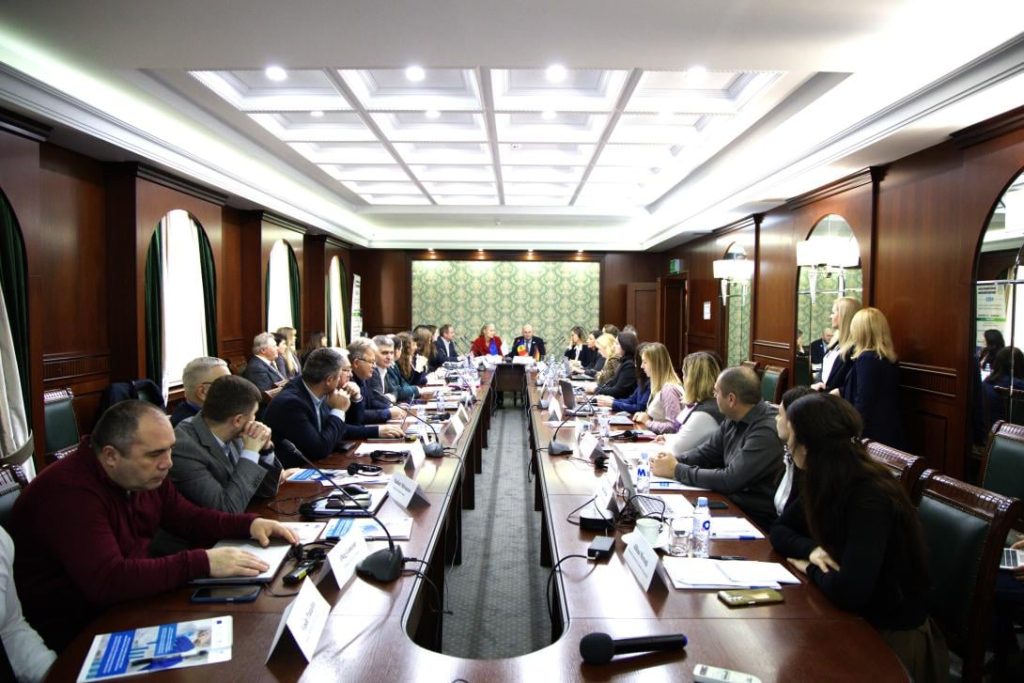
The workshop focused on four key components: clear procedures for food incident management, coordination between national and European institutions, the use of rapid alert systems, and, importantly, effective public communication in sensitive situations.
Training panels were moderated by experts from EU Member States, including Germany and Romania. A dedicated session presents Romania’s experience in managing food crises. Dr. Corina IVANCIU, representative of the National Sanitary Veterinary and Food Safety Authority (ANSVSA), presented the Contingency Plan of Constanța County — one of the most well-structured at regional level, given its strategic role as an entry point for agri-food products into the EU market.
“A food crisis is the most severe type of incident because it directly affects the consumer and activates central intervention mechanisms. We have not had such situations in Romania precisely due to rigorous preparedness and a well-established contingency plan. I am honoured to share this approach here in Chișinău and to learn from the valuable experience of our Moldovan colleagues,” stated Dr. Corina Ivanciu.
Voices of Institutions and Partners
In his opening remarks, Radu Musteață, Director General of the National Food Safety Agency (ANSA), emphasized the importance of the exercise: “Strengthening the food risk management system is a national priority. This workshop, delivered with the expertise of European partners, helps us reinforce alert infrastructure, clarify roles, and work more efficiently together. Our common goal is clear — a safe and healthy product on the consumer’s table. We expect that, in the end, this exercise will contribute to a clear roadmap for implementing European requirements and ensuring a coordinated response in crisis situations.”
Ilona Grünewald, Programme Manager for agriculture, rural development and food safety within the Delegation of the European Union, highlighted the strategic value of preparedness: “We are pleased to have experts from the European Food Safety Authority alongside us and to strengthen this partnership, which is crucial for Moldova on its path towards EU membership. As emergency preparedness is a key responsibility of government, inter-institutional cooperation becomes vital in any food incident. The presence of EU colleagues confirms that Moldova is not alone in this process — European support is firm and active.”
Managing emergencies — from minor incidents to major food crises — is a vital component of modern food control systems. Early detection and effective response protect public health and minimize negative impacts on the economy and trade, both nationally and internationally.
The simulation exercise on food-borne outbreaks was organized by the National Food Safety Agency (ANSA) and the German Federal Institute for Risk Assessment (BfR), together with the EU–UNIDO “Improving the Standards Compliance through Increased National Capacities for Residue Monitoring”, with the participation of the European Food Safety Authority (EFSA) and the German Federal Office of Consumer Protection and Food Safety (BVL).