Moldovan government explores EU best practices for implementing international sanctions
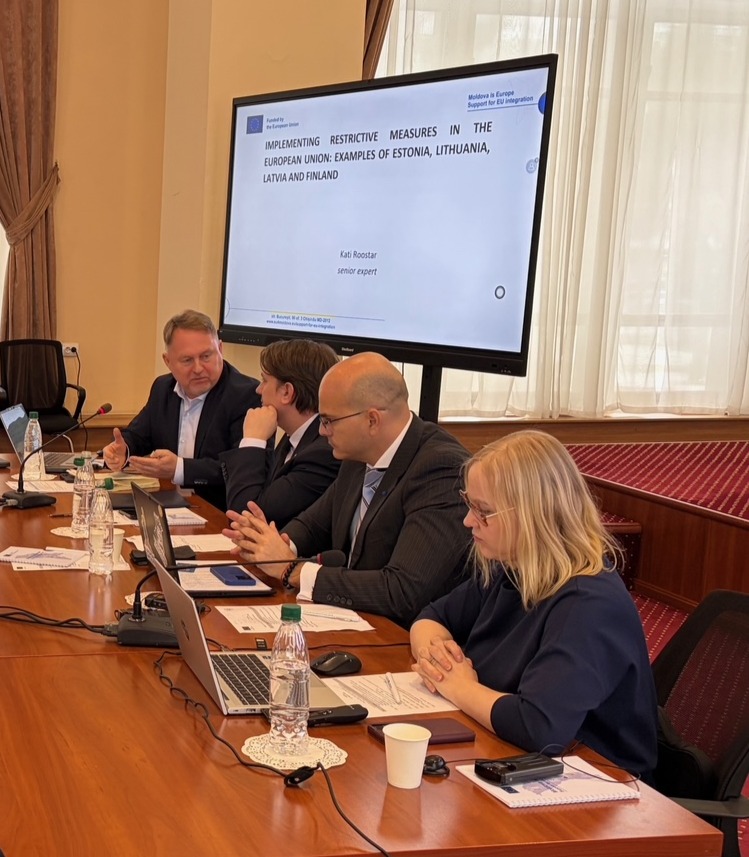
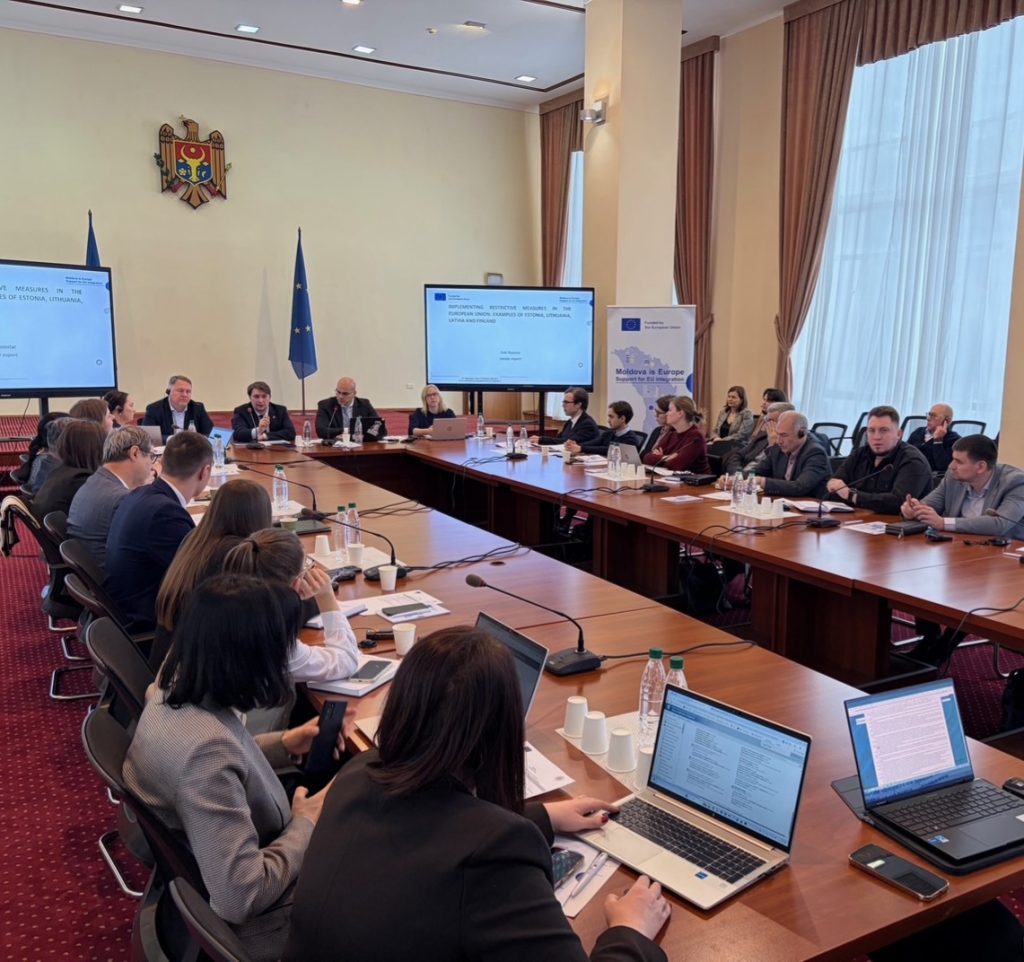
Representatives of the Moldovan Government and EU experts gathered today for a roundtable discussion on the experiences of several EU member states in regulating, managing, and monitoring international restrictive measures/sanctions which represent a powerful non-military foreign policy tool used by EU.
The event was organised with support of the EU-funded project “Moldova is Europe – Support for EU Integration”. It served as a platform for Moldovan authorities to explore regulatory framework and information systems used to monitor the implementation of the international sanctions with objective to improve the current system.
In his opening remarks, the Deputy Secretary General of the Government, Alexandru Iacub, thanked the EU Delegation for the provided support, noting that the Republic of Moldova already has a functional mechanism for monitoring and implementing restrictive measures. However, it is crucial for this mechanism to be aligned with EU standards so that the country is fully prepared for the accession process.
In his turn, the First Secretary of the Political, Press, and Information Section at the EU Delegation to Moldova, Peter Janik, underlined the importance of effective implementation of EU sanctions, noting that “the implementation and enforcement of sanctions fall on Member States at national level. Full and unconditional implementation of sanctions by EU Member States is key for their effectiveness.” He stressed that this is directly linked to Moldova’s European path, adding that “full alignment with the EU’s Common Foreign and Security Policy will be essential for accession – which is why we are very keen to support and accompany Moldova’s efforts in this area.”
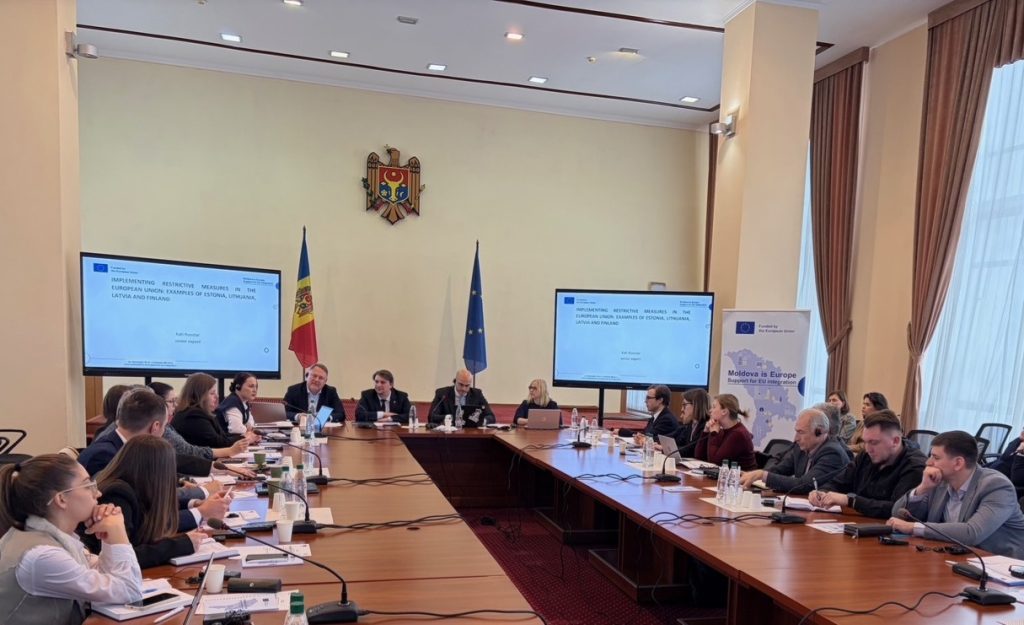
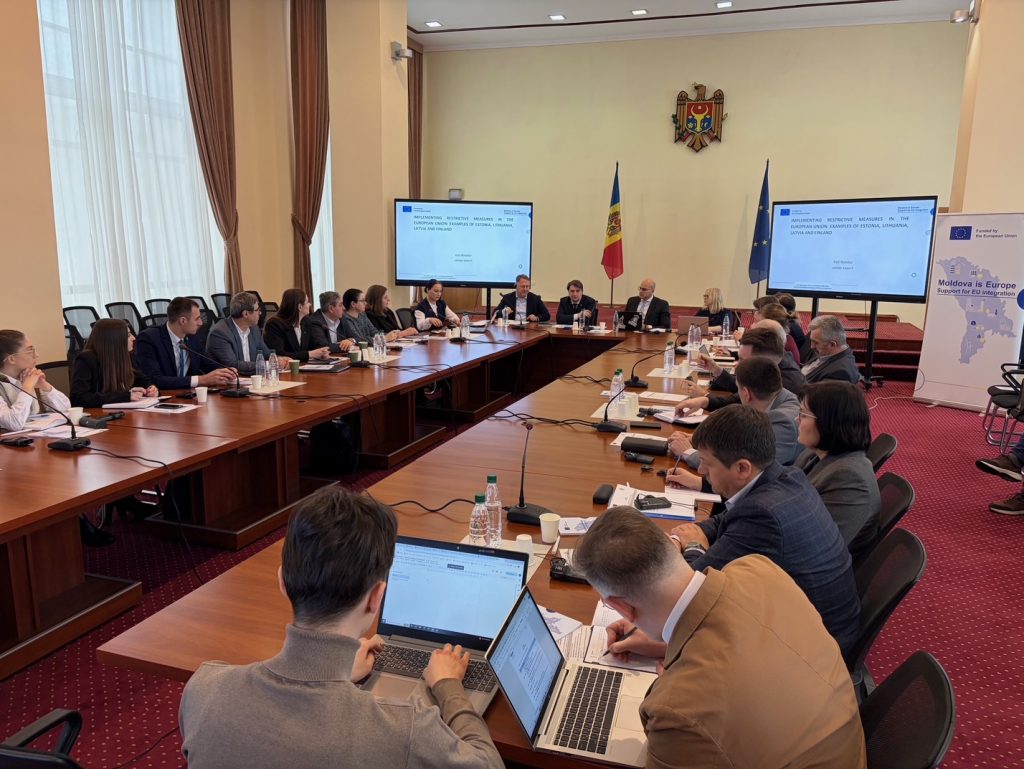
Around 30 representatives from the State Chancellery of the Republic of Moldova, line ministries, central public authorities, and institutions responsible for sanctions monitoring and enforcement attended the event. Discussions focused on identifying the most suitable models for Moldova, particularly by drawing on successful practices from smaller EU member states such as Estonia, Latvia, Lithuania, and Finland.
With an emphasis on institutional coordination, data management, and compliance mechanisms, the event helped strengthen the Moldovan administration’s capacity to improve its regulatory framework and monitoring of restrictive measures to better align with the requirements of the accession negotiations in the area of Foreign Security and Defense Policy.