‘Who said I can’t?’ Steliana Rudko has a superpower – motivating girls and women to fight for their rights
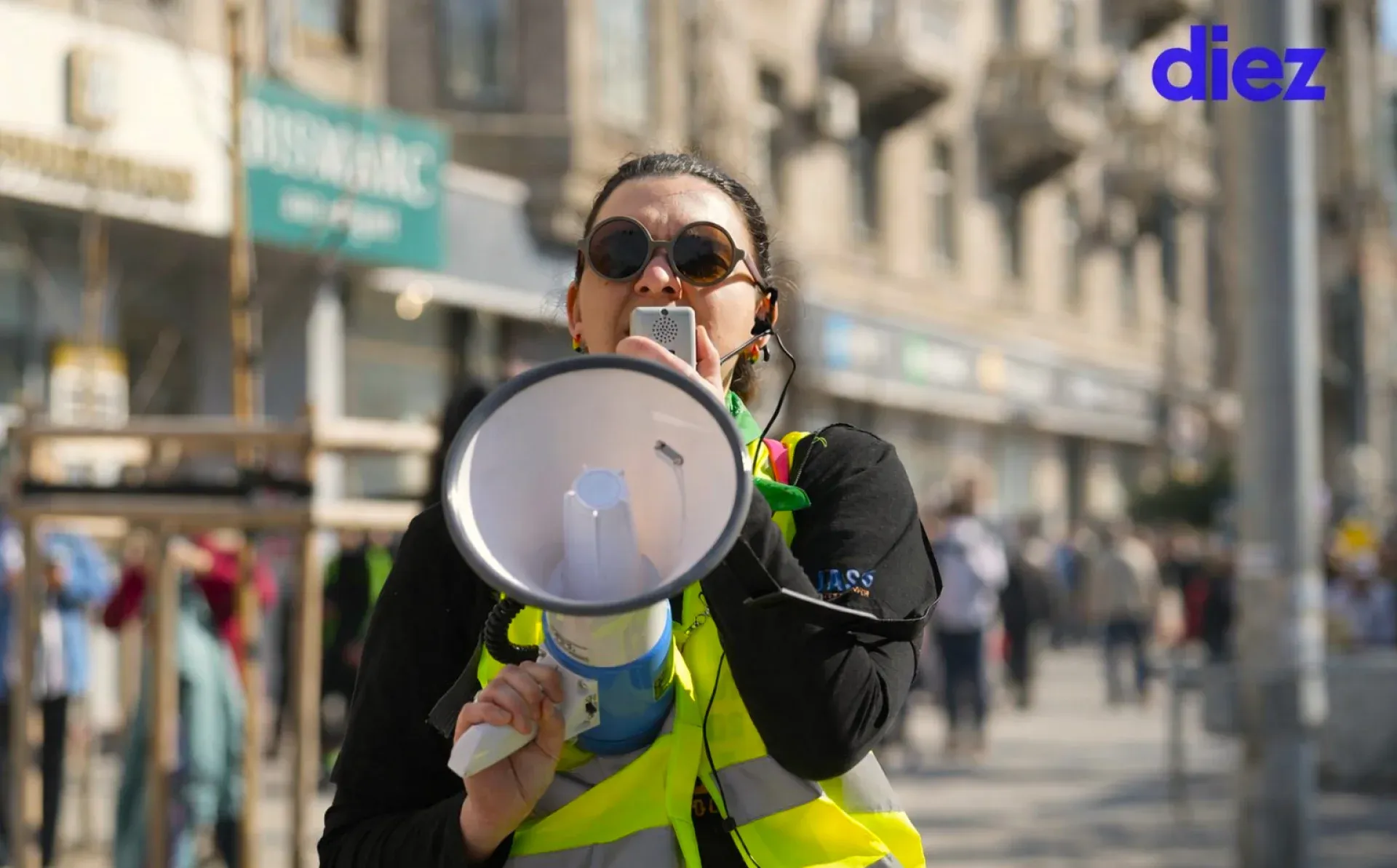
As a teenager, Steliana Rudco felt something was wrong with Moldovan society. At first, she realised she did not agree with her parents’ upbringing – they instilled in her values and ideas characteristic of a patriarchal society. Later, she noticed that teachers did not treat all students equally. Not knowing how to change the situation, she lived through her adolescence with a sense of injustice. It was only as an adult that she began to take action. More specifically, she began to speak openly about the inequality around her and fight to for the rights of girls and women.
“The moment of enlightenment came only during my master’s programme, when I learned that we were to have a course called ‘Human Rights and Women’s Rights’. That’s when I realised how unfair society is to girls and women and that I wanted to work in this field,” Steliana recalls.
In 2020, she joined the ‘Together Against COVID-19’ initiative as a volunteer coordinator. “At the very first event, I met many women and girls who were in such a vulnerable financial situation that they could not afford even basic hygiene products,” says Steliana. She then realised that humanitarian kits should be tailored to the specific needs of women, men, and children.
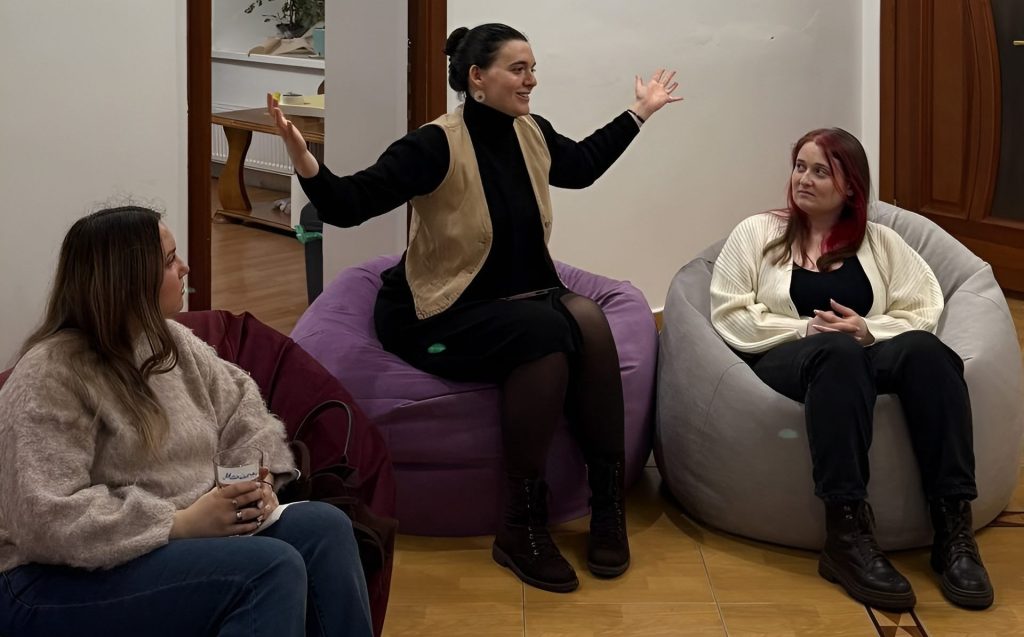
At the same time, Steliana discovered the concept of intersectional injustice. This is when several forms of discrimination or adverse conditions overlap, complicating the life of an individual or an entire group. “A woman essentially consists of several identities. She may be Roma, lesbian, disabled, live in a rural area, be uneducated, and so on. All of these shape her personality. For example, I am a lesbian, and that also defines my identity,” explains Steliana.
In her opinion, every woman has her own specific needs that must be understood and met. “We cannot view women as a homogeneous group. A woman from a rural area, a woman with a disability, or a woman from the LGBTQI+ community face different challenges, and support must reflect this reality.”
‘We are creating communities where women support each other’
When full-scale war broke out in Ukraine, Steliana began working with girls and women displaced from Ukraine. She later joined Laolaltă, an organisation that promotes a society based on empathy and inclusion. The organisation promotes equal opportunities for all, and supports values such as solidarity, compassion, gender equality, and feminism.
“Later, I moved to ‘Femei pentru Femei’, where I work now. I met the girls from the organisation at the protests over the Ana-Maria case [a 19-year-old pregnant girl was brutally murdered in April 2024 – editor’s note]. I really liked their way of acting and expressing their anger, and I decided I wanted to be part of their team.”
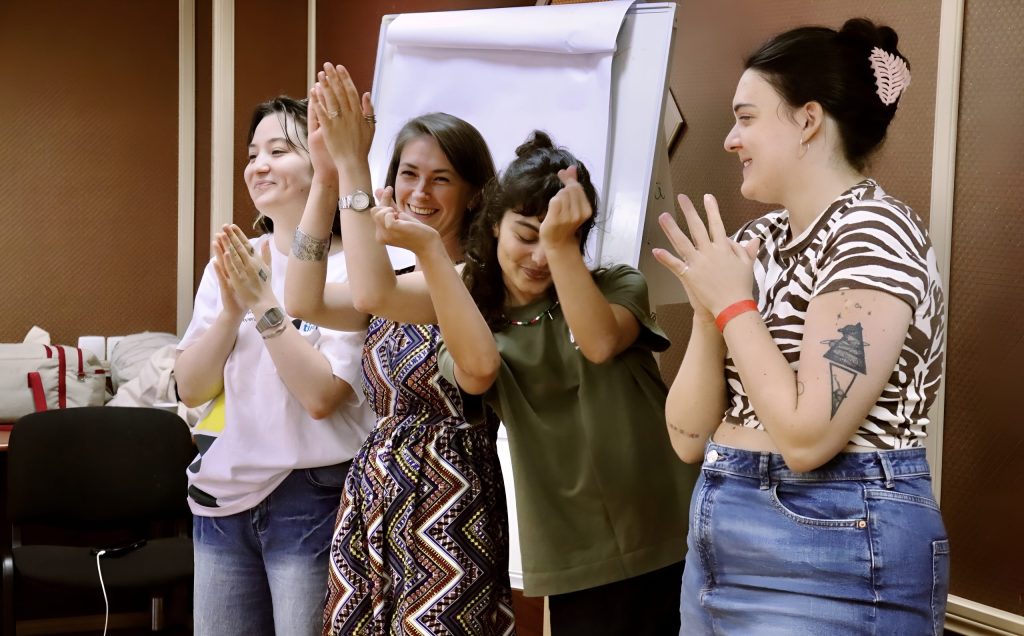
‘Femei pentru Femei’ (‘Women for women’) is a feminist organisation in Moldova that promotes and supports the rights, autonomy and well-being of girls and women. According to Steliana, the organisation is active in three key areas.
“First, we have a community programme – a long-term work with groups of girls and women in rural areas. Classes have already been held in more than ten villages. More than a hundred women have taken part in them. As part of the programme, a group of women is recruited, and they participate in training sessions on personal development, feminism, women’s rights and combating gender-based violence. A therapist and gynaecologist conduct special classes on self-awareness. All this helps participants understand what it means to be a woman in modern society. At the end of the programme, they receive a grant to implement a joint idea. In this way, we are trying to bring women together in communities where members support each other and spend their free time together.”
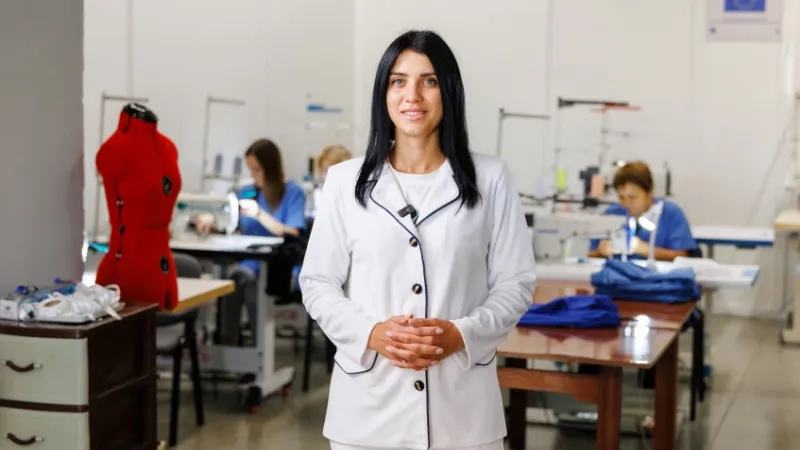
According to Steliana, in one of the villages, the participants wanted to spend the grant on mental health so that every woman in the group could have individual sessions with a therapist. In another village, the participants set up a workshop for sewing traditional shirts, where they can also share their sorrows and joys with each other.
“Fortunately, our team working in rural areas is very charismatic and comes up with a set of arguments that cannot be denied. Therefore, even if at first some women do not see the point of the classes and doubt the result, over time they begin to understand that it was really worth trying.”
The second area, according to Steliana, is the Youth Activism Programme. “This is a very dynamic project, I would even say a very popular one, because young people from all over Moldova are discovering their inner activists and looking for the type of activism that suits them. Of course, the programme also includes a feminist component, because regardless of whether you are a girl, a boy or a non-binary person, everyone needs to know about feminism.”
And the last area, according to the young woman, is a programme to prevent and combat gender-based violence. The initiative was launched at the request of volunteers and community programme participants.
“We conduct five free sessions for girls and women who have suffered from any kind of violence, therapeutic groups and information workshops with our therapist. Improving mental health is not a luxury, but a necessity.”
Steliana currently holds the position of Development and Fundraising Manager at ‘Femei pentru Femei’. Her main responsibilities include fundraising and developing partnerships that align with the organisation’s values and areas of work. Steliana is also actively involved in other initiatives.
“In my first year with the organisation, I was the coordinator of the Programme for the Prevention and Combating of Gender-Based Violence. Therefore, even after moving to a new position, I continue to organise thematic workshops for girls and women participating in our programmes, as well as for various organisations that turn to us for help.”
‘It hurts when the state doesn’t want to listen’
According to Steliana, among the main problems faced by the organisation ‘Femei pentru Femei’ are offensive comments and difficult interactions with local and central authorities.
“I believe that the difficulties our organisation faces do not affect someone specifically, they always affect us as a whole because – for better or worse – we act as a single entity. For example, when offensive comments about our work or posts appear online, it affects the whole communications team and demotivates them.
“Another challenge, as I have heard from colleagues in the regions, is cooperation with authorities at all levels. In rural areas, it can be difficult to convey the importance of women’s communities, and mistrust may arise at first. However, our team is very flexible and open to dialogue, which always gives us a chance to convince local authorities of the importance of our work. There has never been a case where we have failed to do so, especially given that women make up 52% of the country’s population. We are the majority, and in the end, everyone understands the need for participation in our trainings, even if it is sometimes difficult.”
In addition, Steliana notes that because the organisation is very vocal – participating in protests, speaking openly on social media about the state’s mistakes – it is viewed unfavourably by the authorities. “It hurts us when the state does not want to hear criticism and cooperates with organisations that are easy to work with. But this is exactly what civil society should do – draw the attention of state institutions to problems. That is why we continue to fight for our ideas.”
In addition to her work at ‘Femei pentru femei’, Steliana is a member of the Feminist Movement of the Republic of Moldova. It is an ecosystem of activists, NGOs, collectives and initiatives that promote gender equality.
“The Feminist Movement is a social force that activates when injustice occurs and when organisations or activists are not heard. It provides support in protests, advocacy, petition signing, and training. In other words, it supports any activity that an organisation or individual cannot bring to the national level.”
One of the most significant national events organised by the movement is the Feminist Festival. This annual event promotes women’s rights and gender equality. Women’s rights defenders (activists, experts, artists, and NGO representatives) gather for debates, workshops, film screenings, exhibitions, and public discussions.
What feminists really want
In general, through their actions and events, women’s rights advocates in Moldova are seeking to introduce sex education as a compulsory subject in kindergartens, i.e. for pre-school children. Steliana argues that many gender stereotypes and forms of discrimination originate in how children are raised from an early age. In this sense, sex education can help change the mindset in the Republic of Moldova.

“This is the motto of every feminist. We know that it will not change the situation overnight. But if it is implemented, we can hope that in 10-15 years we will have an educated society that understands what equality is.”
As for Steliana’s personal goals, she is focused on combating patriarchal upbringing, which still shapes the mentality and limits the expression of emotions in both girls and boys. She believes that modern parents should think about the values and ideas they pass on to their children, otherwise future generations of Moldovans will grow up in the same conditions of gender inequality.
Steliana urges all girls and women: listen to yourselves! And if you are not confident in your own abilities, ask yourself: “Why can’t I do it?” Or even: “Who said I can’t do it?”
What is your superpower?
Steliana Rudko has once again proven that superpowers do exist and that each of us has at least one. So, all we need to do is find our superpower and develop it.
To learn more about Steliana’s superpower, watch this video.
Author: Cristina Platas
Article published in Romanian and Russian on Diez.md
The post ‘Who said I can’t?’ Steliana Rudko has a superpower – motivating girls and women to fight for their rights appeared first on EU NEIGHBOURS east.