The rehabilitation of the R33 Hîncești–Lăpușna–M1
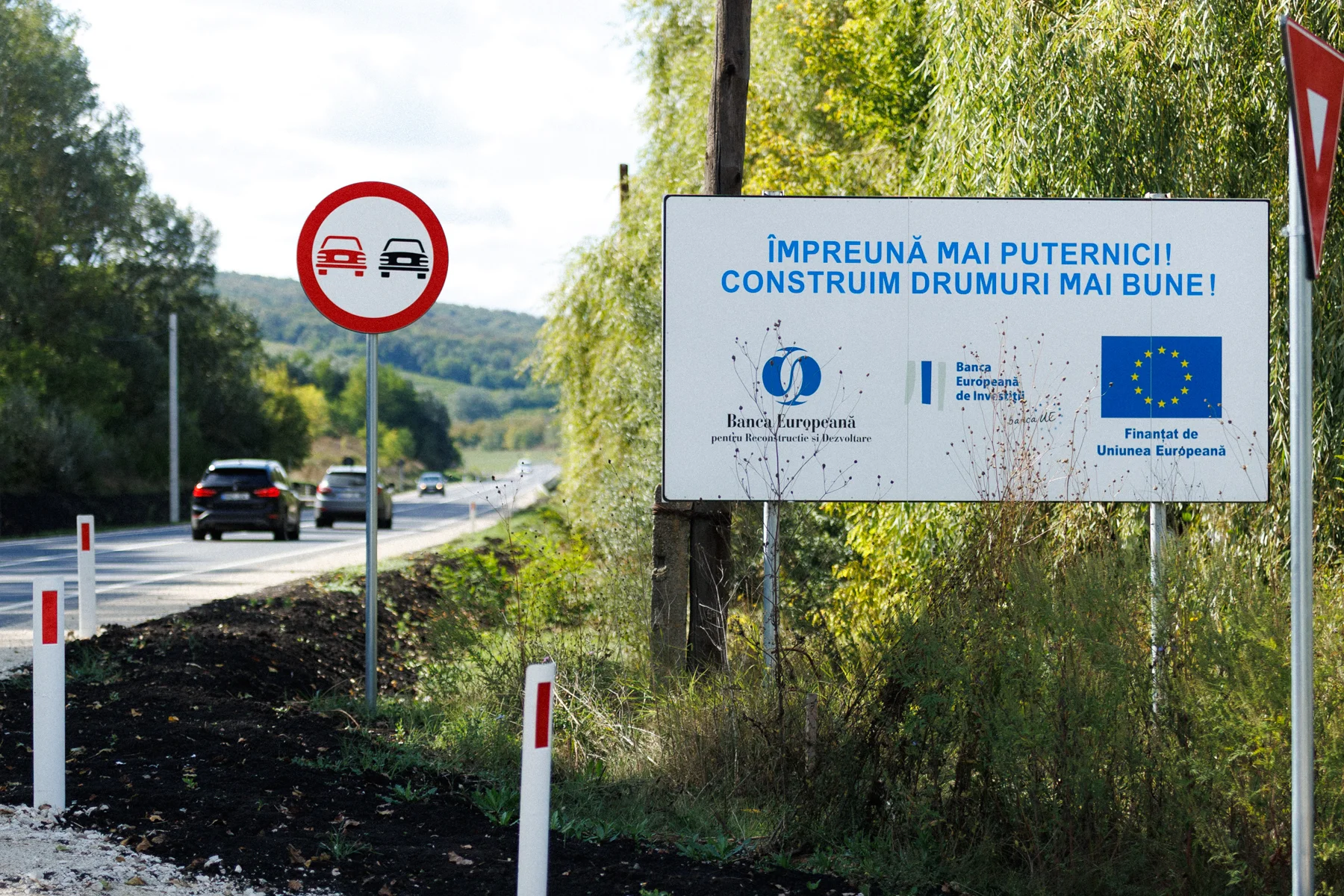
The rehabilitation of the R33 Hîncești–Lăpușna–M1 road represents one of the most important investments in road infrastructure in the Hîncești district. The modernized section has a length of 37.2 kilometers and passes through eight localities: Hîncești, Anini, Rusca, Lăpușna, Pervomaiscoe, Strîmbeni, Onești, and Sofia. Due to its positioning, the road plays a crucial role in connecting these communities to the national road network and, further on, to one of the main traffic routes toward the border with Romania, via the Leușeni border crossing point.
The project’s funding amounts to 38.7 million euros and is provided through a loan from the European Bank for Reconstruction and Development (EBRD). The works targeted not only the resurfacing of the roadway, but a broader intervention on the road infrastructure. These included repairing and widening the existing carriageway, constructing a new road structure on certain sections, rehabilitating and building three bridges, installing automated traffic light and lighting systems, as well as arranging bus stops. However, a project of such scale can be viewed beyond just the number of rehabilitated kilometers or the investment value.
For the communities along the route, the road is part of the infrastructure used daily to commute to school, work, medical facilities, or regional administrative and commercial centers. The quality of such a connection directly influences people’s mobility and the predictability of travel between localities. For local entrepreneurs and producers, road infrastructure determines how goods reach clients and markets, logistic costs, and access to key transport corridors. For public transport operators and freight carriers, the condition of the road is reflected in travel time, vehicle wear and tear, and route planning.