Events


Moldova strengthens sanctions implementation mechanism with EU Support

As the Republic of Moldova advances on its European path, aligning with EU rules on restrictive measures—commonly known as sanctions—is both a legal obligation and a critical element of national security. A three-day expert mission, organised through the European Commission’s TAIEX instrument and taking place on 14–16 April 2026 in Chisinau, is supporting Moldovan authorities […]

As the Republic of Moldova advances on its European path, aligning with EU rules on restrictive measures—commonly known as sanctions—is both a legal obligation and a critical element of national security. A three-day expert mission, organised through the European Commission’s TAIEX instrument and taking place on 14–16 April 2026 in Chisinau, is supporting Moldovan authorities in strengthening the implementation of these measures. The event is organised in cooperation with the State Chancellery and the EU- and Denmark-funded project “Moldova is Europe – Support for EU Integration”.

Around 35 representatives from the State Chancellery of the Republic of Moldova, line ministries, central public authorities and institutions responsible for sanctions monitoring and enforcement are attending the event.

The mission brings together senior experts from Croatia, Germany, and Slovenia, who are sharing practical experience and guiding Moldovan officials in improving how international restrictive measures are applied. Discussions focus on how restrictive measures are designed and enforced across the EU and how Moldova can adapt these approaches to its own institutional framework. Participants are also exploring practical ways to improve inter-agency cooperation, strengthen monitoring systems, and ensure clear and reliable record-keeping.

Particular attention is being given to identifying and preventing attempts to bypass restrictive measures, as well as to applying effective penalties in cases of non-compliance. Strong administrative systems, well-trained staff, reliable tools and clear coordination between institutions are key to ensuring that these measures are applied consistently and effectively.

In his opening remarks, Alexandru Iacub, Deputy Secretary General of the Government of the Republic of Moldova, said: “The TAIEX expert mission is not simply about strengthening our national team, which is already well-equipped and highly qualified. Our goal is to deepen our understanding of how restrictive measures should be correctly applied, to identify where gaps exist, and to find ways to implement them more seamlessly.”

Primož Vehar, Deputy Team Leader of the project, added: “These TAIEX training sessions form part of the EU’s continued support to Moldova’s legal approximation process, building on the recent roundtable which examined suitable models from Estonia, Latvia, Lithuania, and Finland. But the TAIEX mission goes beyond knowledge-sharing — it is a concrete investment in Moldova’s institutional readiness.”

This expert mission is part of the EU’s broader efforts to support Moldova in building strong, transparent and effective institutions. By improving how restrictive measures are implemented, Moldova is taking another important step towards EU integration and strengthening its role as a reliable partner on the international stage.

Expertise from the Czech Republic for the development of industrial hemp cultivation in the Republic of Moldova

154 farmers from the Central, Northern and Southern regions of the Republic of Moldova participated in seminars dedicated to industrial hemp cultivation — a crop used in industries such as textiles, construction, cosmetics and food production. The seminars were organized in Chișinău, Bălți and Comrat within the Team Europe Initiative “Sustainable Food Systems.” The events […]

154 farmers from the Central, Northern and Southern regions of the Republic of Moldova participated in seminars dedicated to industrial hemp cultivation — a crop used in industries such as textiles, construction, cosmetics and food production. The seminars were organized in Chișinău, Bălți and Comrat within the Team Europe Initiative “Sustainable Food Systems.”

The events were organized by the Czech Development Agency (CzDA), in partnership with Solidarity Fund PL and in collaboration with the Agricultural and Rural Advisory Center and aimed to facilitate the transfer of European expertise and promote sustainable crops adapted to new climate conditions.


Bilateral cooperation and support for sustainable agriculture

At the opening of the seminar held in Chișinău, the Ambassador of the Czech Republic to the Republic of Moldova, His Excellency Jaromír Plíšek, highlighted the importance of bilateral cooperation in agriculture and the continuous support provided by the Czech Republic for the development of Moldova’s agri-food sector.

“Agriculture has always been a priority area of cooperation between the Czech Republic and the Republic of Moldova. Industrial hemp cultivation is relevant both for adapting to drought and for modern and environmentally friendly solutions.”

H.E. Jaromír Plíšek, Ambassador of the Czech Republic to the Republic of Moldova


Transfer of expertise from the Czech Republic

A key element of the seminar was the participation of the Czech expert Marie Bjelková, a specialist in the breeding and cultivation of industrial hemp. She presented the experience of European Union Member States regarding cultivation technologies, harvesting and processing, as well as examples of economic valorization of hemp-derived products.

“Industrial hemp has real potential in Moldova, but success depends on the correct application of technologies and the development of the value chain.”

Dr. Marie Bjelková, Agritec Plant Research s.r.o., Czech Republic

The seminar also included practical information on the selection of varieties, compliance with cultivation technologies and the importance of processing for creating added value.


Regulatory framework and sector development

During the event, the legislative provisions regarding the cultivation and certification of industrial hemp in the Republic of Moldova were also presented.

Viaceslav Grigorița, President of the Association of Hemp Producers and Processors in Moldova, emphasized the importance of strengthening the value chain and investing in processing.

“The sector has growth potential, but it is essential to invest in processing and develop specialized knowledge for farmers.”

Viaceslav Grigorița, President of the Association of Hemp Producers and Processors in Moldova


Relevance for farmers

Farmers who have already tested the crop shared practical experiences from the field.

“Hemp is a crop that requires investment and complete infrastructure, but it has proven to be stable and resilient. Interest from other producers is growing.”

Ion Grecu, agricultural producer


Funding opportunities for farmers

During the seminar, representatives of Solidarity Fund PL (SFPL) presented funding opportunities available to farmers interested in developing activities related to industrial hemp. Participants were informed about support mechanisms and grant opportunities dedicated to investments in processing and modernization.

This component complements the transfer of technical expertise by providing farmers not only with knowledge but also with concrete tools for implementation.


About the project

The Team Europe Initiative “Sustainable Food Systems” is funded by the European Union and the Czech Republic and implemented by the Czech Development Agency, Solidarity Fund PL in Moldova, and the Latvian Rural Advisory and Training Centre. The project is implemented over a four-year period starting from June 2025.

The initiative aims to promote sustainable agricultural practices, diversify crops and strengthen the resilience of the agri-food sector in the Republic of Moldova, including by facilitating farmers’ access to expertise, technical support and financing opportunities.

This article was produced with the financial support of the European Union. Its contents are the sole responsibility of the Team Europe Initiative “Sustainable Food Systems” and do not necessarily reflect the views of the European Union.

The European Commission has opened applications for the 10th edition of Youth4Regions, its flagship programme designed to support aspiring journalists

The European Commission has opened applications for the 10th edition of Youth4Regions, its flagship programme designed to support aspiring journalists.  From 10 to 16 October 2026, selected participants will spend a week in Brussels, to benefit from expert-led training, hands-on newsroom experience and exclusive access to both EU institutions and leading media organisations. Applications can be […]

The European Commission has opened applications for the 10th edition of Youth4Regions, its flagship programme designed to support aspiring journalists. 

From 10 to 16 October 2026, selected participants will spend a week in Brussels, to benefit from expert-led training, hands-on newsroom experience and exclusive access to both EU institutions and leading media organisations. Applications can be submitted until 7 July 2026 on the programme’s website.

This year’s programme welcomes submissions across four formats: written feature journalism, video journalism, audio journalism, and photojournalism. Youth4Regions is open to students and junior journalists from EU Member States, neighbouring countries, and candidate countries, offering a unique opportunity to develop skills, build professional networks, and gain first-hand insight into EU affairs reporting. 300 young reporters have so far benefitted from such support since the launch of the programme, in 2017.

Participants will also have the chance to compete for the prestigious Megalizzi – Niedzielski Prize, honouring exceptional young journalists. It will be awarded on 14 October 2026. Winners will also be appointed Cohesion Correspondents 2027 and be sent on a two-week field mission, reporting from the ground on cohesion policy projects and their impact on people’s lives across EU Member States.

(For more information: Maciej Berestecki — Tel.: + 32 2 296 64 83; Isabel Arriaga e Cunha – Tel: +32 229-52117)

Executive Master in EU Studies programme at the European Institute – two-year programme for professionals

Applications are now open for the Executive Master in EU Studies at the European Institute, CIFE, a flexible, two-year programme designed for professionals who want to study while continuing their careers. The European Institute is one of the seven institutes supported by the European Commission. The two-year programme starts in October 2026. The programme provides […]

Applications are now open for the Executive Master in EU Studies at the European Institute, CIFE, a flexible, two-year programme designed for professionals who want to study while continuing their careers.

The European Institute is one of the seven institutes supported by the European Commission. The two-year programme starts in October 2026.

The programme provides structured knowledge of EU fundamentals, focused on key issues for in-depth understanding, and a future-oriented approach to EU integration.

Through a combination of e-learning and intensive face-to-face-learning phases (during weekends in Berlin, Barcelona, Budapest, Brussels, Nice, Rome and Vienna), the programme offers a blend of theoretical and practical knowledge, with courses taught by renowned academics from various European countries and experts from research institutions and national governments.

A limited number of tuition grants are available.

To apply, one needs to have a Bachelor degree and proficiency in English.

The deadline for applications is 5 September.

Completing the course, graduates receive two certifications: the Executive Master in EU Studies diploma of CIFE, granting 60 ECTS at Master level, and the Policy Officer in European and International organisations degree qualification (level 7 EQF), recognised by the French state.

An admission information session is scheduled for 7 April 2026. To register, please, fill this online form. 

Find out more

Press release

A more stable, transparent and investor-friendly financial system – the aim of aligning the secondary credit market with EU standards

Moldova is in the process of drafting a law that will protect borrowers and bring clear, transparent rules to the secondary credit market — inspired by European Union legislation and practice. The new framework will extend borrower protections beyond the moment a loan is granted, regulating also the stages of debt collection and loan management. […]

Moldova is in the process of drafting a law that will protect borrowers and bring clear, transparent rules to the secondary credit market — inspired by European Union legislation and practice. The new framework will extend borrower protections beyond the moment a loan is granted, regulating also the stages of debt collection and loan management. To support this process, 11 representatives of the National Commission for Financial Markets and Ministry of Finance participated in a two-day training dedicated to aligning Moldova’s draft legislation with the EU Directive 2021/2167 on credit servicers and credit purchasers. The event took place on 2–3 April and was organised within the EU and Denmark funded project ”Moldova is Europe – Support for EU Integration”.

The training sessions were facilitated by Angela-Margareta Oprea, Senior Non-Key Expert on Consumer Protection in Financial Services within the project. The first day covered EU Directive 2021/2167’s requirements in depth and reviewed how EU member states have transposed it, with special attention to the institutional capacity of the National Commission for Financial Markets to supervise the new framework. The second day started with reviewing the Moldovan draft law and formulating recommendations for its improvement. The day continued with an extended meeting with 19 private sector representatives — commercial banks, non-bank credit organisations, and debt collection companies — to present the new regulatory requirements and their impact on the business models of the entities concerned.

Aligning financial market legislation with EU rules is not just a legal formality — it is a building block for a more stable, transparent, and investor-friendly financial system that ultimately benefits consumers. The two-day training is a direct contribution to this effort, strengthening the capacity of Moldova’s financial regulators to draft and implement legislation that meets EU standards.

European Solidarity Corps: volunteering and training in Turkiye on disaster preparedness, climate change

The ‘You Future’ project, an ESC team volunteering project supported by the European Commission, invites volunteers, including from Azerbaijan, Georgia, Moldova, and Ukraine, to take part in a 30-day volunteering programme. The participants will receive training on key topics such as disaster preparedness, climate change, post-disaster recovery, and community resilience.  The volunteering will take place […]

The ‘You Future’ project, an ESC team volunteering project supported by the European Commission, invites volunteers, including from Azerbaijan, Georgia, Moldova, and Ukraine, to take part in a 30-day volunteering programme. The participants will receive training on key topics such as disaster preparedness, climate change, post-disaster recovery, and community resilience. 

The volunteering will take place from 25 April to 24 May 2026, in Sorgun, Yozgat Province of Türkiye. 

The training will be supported by various workshops, seminars, field visits, and group activities, fostering cooperation among volunteers. Volunteers will organise training sessions, events, and campaigns for local children, young people, and adults, sharing the knowledge they have gained with the community. 

Volunteers will share an apartment in Sorgun with double rooms, bathrooms, and a shared kitchen. As part of the project, volunteers will receive €6 per day as pocket money and €6 per day as a food allowance.

The applicants should be creative, active, open-minded and solution-oriented, tolerant and have sufficient English language skills to communicate effectively.

The deadline for applications is 7 April.

Find out more

Press release

Moldova opens its gas market to large consumers, anchoring energy security in EU integration

Moldova has opened its gas market for large non-household consumers, which account for 55% of national demand, the Energy Community Secretariat announced on 1 April, calling this step a “major milestone”, supported by an EU-oriented energy strategy. Large non-household consumers – including power and heating utilities, industrial operators, and commercial users – are now required […]

Moldova has opened its gas market for large non-household consumers, which account for 55% of national demand, the Energy Community Secretariat announced on 1 April, calling this step a “major milestone”, supported by an EU-oriented energy strategy.

Large non-household consumers – including power and heating utilities, industrial operators, and commercial users – are now required to procure gas at fully market-based prices.

As of 31 March 2026, 95% of eligible large consumers had switched to the free market, representing 99% of the gas volume in the liberalised segment. The remaining 5% have temporarily disconnected due to seasonal consumption and are expected to return to contracting on the free market later.

“The move is particularly significant for an Energy Community Contracting Party heavily reliant on imported natural gas for electricity and heat, leaving it exposed to single-supplier risks,” said a press release issued by the Secretariat. “Gas market liberalisation is a fundamental reform required to move away from the danger of single-supplier dependencies by preparing for future integration with the EU internal energy market.”

“In geopolitically turbulent times, it is worth remembering that energy market integration is the only real way forward,” said Artur Lorkowski, Director of the Energy Community Secretariat. “This move will drive investment, competition, and the diversified supply that energy security and affordability depend on.” 

Gas market opening for the rest of Moldova’s consumers will progress gradually. The phase-out of regulated prices will be completed for medium non-household consumers by April 2027. At the same time, households, small businesses and essential service providers will still be able to choose between regulated supply and market-based contracts, helping ensure a smooth and consumer-focused transition.

Find out more

Press release

Better decisions, better services: Moldova rethinks how ministries work

How can ministries be better organised? How can they plan, cooperate and deliver better results? These key questions brought together around 50 Moldovan senior officials and EU experts at a roundtable on 2 April in Chisinau. The event was organised within the EU and Denmark funded project “Moldova is Europe – Support for EU Integration” […]

How can ministries be better organised? How can they plan, cooperate and deliver better results? These key questions brought together around 50 Moldovan senior officials and EU experts at a roundtable on 2 April in Chisinau. The event was organised within the EU and Denmark funded project “Moldova is Europe – Support for EU Integration” in close cooperation with the State Chancellery and OECD/SIGMA. The focus was on one major goal: making public administration work in a way that truly benefits citizens, not only now as part of accession negotiations, but also in the future as an EU Member State.

Recent findings from a comparative study by the OECD/SIGMA – conducted across nine EU candidate countries – as well as EU project assessments, reveal that Moldova’s ministries face several challenges. These include the politicisation of certain management positions and the lack of clear performance management frameworks.

During the discussion, EU experts and Moldovan senior officials shared insights and practical ideas to improve the current situation. The joint message was clear: with better organisation, clear roles and professional leadership, ministries can deliver better results for everyone.

In her opening remarks, Lilia Dabija, Deputy Secretary General of the Government, stated: “Ministries are the backbone of central public administration and play a decisive role in translating government priorities into impactful public policies. Strengthening their institutional capacity is essential not only for modernising public administration, but also for accelerating the European integration process. Through better organised institutions, merit-based public management and stronger coordination, we can ensure better policies and higher-quality public services for citizens.”

Martina Spernbauer, Team Leader for Governance, EU Delegation to the Republic of Moldova, added: “Public Administration Reform is crucial in accession negotiations, but more importantly, its successful completion is essential for Moldova to function efficiently as an EU Member State and to fully benefit from all the technical and financial opportunities the EU offers.“

In her turn, Jasmin Sørensen, Deputy Head of the Mission, Embassy of Denmark in Moldova, mentioned: “Denmark is firmly committed to support Moldova’s European aspirations and commends the public authorities commitment to meaningful reform. Making public institutions more efficient, particularly the ministries, is essential to delivering transparent governance and better serving the citizens.”

The roundtable discussion is part of ongoing efforts to support Moldova in building a modern, transparent and professional public administration—one that is closer to citizens and aligned with EU practices.

Secretari generali din Moldova si experti UE la masa din sala de sedinte a Guvernului

8 communities from Eastern Partnership countries, members of the M4EG network, will benefit from assistance to implement the Mission-oriented Portfolios for Local Transformations

Eight local communities from the Republic of Moldova, Armenia, and Ukraine, members of the M4EG Network, will benefit from technical assistance and funding of up to USD 60,000 each. The selected communities will undergo a structured process to develop mission-oriented local economic development portfolios and will apply tailored learning tools to strengthen local governance, enhance […]

Eight local communities from the Republic of Moldova, Armenia, and Ukraine, members of the M4EG Network, will benefit from technical assistance and funding of up to USD 60,000 each.

The selected communities will undergo a structured process to develop mission-oriented local economic development portfolios and will apply tailored learning tools to strengthen local governance, enhance citizen participation in decision-making, and foster an enabling environment for economic growth.

The call for expressions of interest for communities in the Republic of Moldova prioritizes economic resilience and aims to improve essential public services, stimulate sustainable economic growth, and develop infrastructure and institutional capacities adapted to an evolving context.

Selected communities will receive financial support of up to USD 60,000 per community, with a required co-financing contribution of at least 10% of the total proposal value. The assistance will be provided in phases: up to USD 20,000 during the inception phase and up to USD 40,000 during the growth phase.

The deadline for submission of applications is 17 April 2026, 17:00 (local time).

Launched and funded by the European Union in 2017, the Mayors for Economic Growth” (M4EG) Initiative has been implemented by the United Nations Development Programme (UNDP) since 2021, in close cooperation with the EU, local public authorities, and a wide range of partners.

EU Accelerator 3.0 launched in Chișinău: 90 young people become the voice of a new generation on the European Union

What does the new generation that will communicate about the European Union (EU) in the Republic of Moldova look like? The answer took shape in Chișinău, where 90 young people participated in the launch of the “EU Accelerator 3.0 – EU Communicators” programme during an interactive event. Over two days – 28–29 March 2026 – […]

What does the new generation that will communicate about the European Union (EU) in the Republic of Moldova look like? The answer took shape in Chișinău, where 90 young people participated in the launch of the “EU Accelerator 3.0 – EU Communicators” programme during an interactive event. Over two days – 28–29 March 2026 – participants from across the country engaged in an intensive process of learning, dialogue, and exchange of knowledge and experience, aimed at strengthening their ability to communicate about the EU in a clear, creative, and relevant way for their generation.

The launch event brought together participants from Chișinău, Orhei, Leova, Sîngerei, Soroca, Edineț, Fălești, Comrat, and Ungheni. They are active members of EU Information Centres and Euro Clubs, selected for their community engagement and interest in European values. The programme, running from March to July 2026, combines theoretical training with practical application, with a focus on digital storytelling, critical thinking, and countering disinformation.

“The European Union is not something abstract – it represents concrete realities. It means opportunities, travel, education, the quality of the products we buy, better roads, and renovated hospitals. It is not only about politicians speaking on television or decision-makers in Brussels, but above all about how these decisions affect our everyday lives. Looking at you, I feel confident about Moldova’s future. While many say that young people are the future of this country, I would say that you are its present. You are here to take action, to learn how to communicate, how to reach and engage your audiences, how to build campaigns, and how to create content that resonates with the public,” said Máté Csicsai, Deputy Head of the EU Delegation to the Republic of Moldova.

During the interactive sessions, participants explored how to transform information about the EU into engaging social media content, discussed the challenges of disinformation, and interacted directly with content creators, including Cristian Cebotari, who shared insights on how to create and leverage compelling social media content. The programme also included EU-themed quizzes, dialogue sessions, and dynamic formats such as “EU Speed Dating,” facilitating the exchange of ideas, experiences, and best practices.

“EU Accelerator 3.0 was a motivating experience, full of new ideas and meaningful discussions. Meetings with guest speakers inspired us to be more active and engaged in our communities. I am glad I participated and would like to take part in similar initiatives in the future. Moldova’s integration into the EU is a real opportunity for the country’s development, offering more opportunities for young people in key areas. It is a process that requires effort and commitment – first and foremost from us – but one that can lead to a more stable and prosperous future,” said Adriana Mîndov from Orhei, a participant in the EU Accelerator programme.

Throughout the programme, participants will conduct community-level research on perceptions of the European Union, develop local communication campaigns, and create digital content tailored to social media platforms. The initiative will culminate in a team-based competition, where participants who generate the highest online impact will have the opportunity to take part in a study visit to Brussels – a unique experience that will allow them to gain first-hand insight into EU institutions and better understand the EU decision-making process.

Through EU Accelerator 3.0, the European Union continues to support youth engagement in democratic life and to strengthen a network of communicators capable of explaining the benefits of European integration and contributing to countering disinformation in the Republic of Moldova. The launch event marked not only the official start of the programme, but also a platform for inspiration and collaboration. It confirms that the future of communicating about the EU in Moldova is already in the hands of an informed, creative, and engaged generation.

Background

“EU Accelerator 3.0 – EU Communicators” is a practical training initiative designed for young members of EU Information Centres and Euro Clubs in the Republic of Moldova. It aims to develop a new generation of communicators capable of explaining, in a clear and accessible way, the processes and benefits of European integration.

The 2026 edition brings together 90 young people from across the country, selected based on their motivation and community involvement. The programme runs from March to July 2026 and combines theoretical training with practical application. Participants will learn how to create digital content (video, social media, storytelling), analyse public perceptions of the EU through community-level research, develop and implement local communication campaigns, counter disinformation and myths related to European integration, and promote the tangible benefits of EU support.

The programme will culminate in a youth-led digital communication campaign implemented by Euro Clubs on social media platforms. The team whose campaign achieves the highest visibility will be awarded a study visit to Brussels.

EU honours memory of victims of Soviet deportations in Moldova

Today, the EU Delegation to Moldova honours the memory of the victims of Soviet deportations in Moldova. On 1 April 1951, the third wave of Stalinist deportations from the Republic of Moldova began, known under the code name ‘Operation North’.  “Unlike in previous years, this campaign was directed against freedom of conscience: more than 2,600 people were forcibly evicted on religious grounds,” the EU Delegation says in a Facebook post. On the night of 31 March to 1 April, more than 720 families were sent in freight wagons to the Tomsk and Irkutsk regions of Siberia, where they were subjected

The post EU honours memory of victims of Soviet deportations in Moldova appeared first on EU NEIGHBOURS east.

Today, the EU Delegation to Moldova honours the memory of the victims of Soviet deportations in Moldova.

On 1 April 1951, the third wave of Stalinist deportations from the Republic of Moldova began, known under the code name ‘Operation North’.

“Unlike in previous years, this campaign was directed against freedom of conscience: more than 2,600 people were forcibly evicted on religious grounds,” the EU Delegation says in a Facebook post.

On the night of 31 March to 1 April, more than 720 families were sent in freight wagons to the Tomsk and Irkutsk regions of Siberia, where they were subjected to forced labour and stripped of their property.

“This episode of political and ideological repression during the Soviet era left a deep mark on the history of local communities and in the collective memory,” the Delegation’s post reads.

The Delegation also reaffirms the importance of protecting fundamental human rights, including freedom of conscience and human dignity: “Upholding these values remains fundamental to building a democratic and secure society.”

Find out more

Press release

The post EU honours memory of victims of Soviet deportations in Moldova appeared first on EU NEIGHBOURS east.

Connecting Moldova to European infrastructure. How the European Union and the European Investment Bank support the country’s modernisation

The Republic of Moldova is modernising its transport infrastructure and strengthening its links with the European Union. With support from the EU and the European Investment Bank (EIB), major projects are being prepared that will reshape how people travel, how goods move, and how trade functions — both with the EU and across the region. […]

The Republic of Moldova is modernising its transport infrastructure and strengthening its links with the European Union. With support from the EU and the European Investment Bank (EIB), major projects are being prepared that will reshape how people travel, how goods move, and how trade functions — both with the EU and across the region.

Better roads, upgraded railways and more efficient logistics hubs are now clear priorities. These efforts are supported through the Facility for Eastern Partnership Investment in Connectivity (EPIC). Funded by the EU and the EIB, EPIC provides the expertise needed to ensure that projects are properly planned, aligned with European standards and ready for investment. Ultimately, infrastructure modernisation is about improving connections between people, goods and opportunities.

Moldova Growth Plan and infrastructure investments

As Moldova moves closer to the European Union and progresses towards connecting to the Trans-European Transport Network (TEN-T), the benefits are becoming clearer. Travel can become faster and safer, freight transport more efficient, and businesses can gain easier access to European markets. At the same time, these investments can support more sustainable solutions with a lower environmental impact.

These efforts are backed by the Moldova Growth Plan, a €1.9 billion financial package provided by the European Union until 2027. More than €500 million has already been disbursed, and funding continues to support reforms and investments in key sectors, including transport.

“The Growth Plan for the Republic of Moldova reflects the European Union’s commitment to supporting the reforms and investments needed for the country’s development. Modern infrastructure is a key part of this effort, as it helps connect Moldova to European networks and strengthens its economy,” said the Ambassador of the European Union to the Republic of Moldova, Iwona Piórko”.

The plan also includes the modernisation of over 200 kilometres of roads, the development of the Iași–Chișinău–Odesa corridor, the integration of railways into the EU network, and the rollout of modern solutions such as intelligent transport systems and road safety programmes. Around €7.7 million is allocated to transport sector reforms and strengthening economic resilience.

Moldova on the European transport map

A key objective is to connect the Republic of Moldova to the Trans-European Transport Network (TEN-T), which links cities, ports and economic centres across Europe through roads, railways, maritime routes and logistics hubs. Integration into this network opens access to major European corridors and new funding opportunities. It also helps boost trade, attract investment and support economic growth.

“Infrastructure investment is essential for building a more competitive economy and strengthening links with European markets. Through the projects we support, Moldova is moving closer to integration into European networks and creating new opportunities for development,” said Alberto Carlei, Head of the European Investment Bank Representation in the Republic of Moldova.

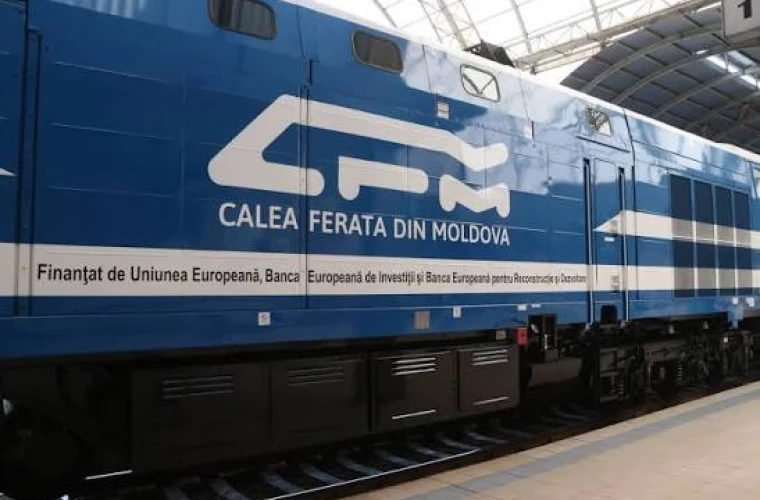
Key projects supported through EPIC include the modernisation of the Chișinău ring road (sections 4–6), the M3 corridor linking the capital to the Danube port, and the R7 corridor connecting Moldova with Ukraine and Romania. These are complemented by strategic projects such as the Chișinău–Ungheni railway line, which will become Moldova’s first electrified railway built to European standards, as well as the construction of a multimodal freight terminal in Chișinău.

Moldova, the leading EPIC beneficiary in the region

Preparing infrastructure projects is a key step in turning plans into real investments. This is where EPIC comes in, providing Moldovan authorities with the expertise needed to develop solid, well-structured projects.

“For us, it is essential to prepare projects that respond to the real needs of people and the economy. The support provided through EPIC helps us set clear priorities and develop projects that can be implemented and financed,” said Vladimir Bolea, Minister of Infrastructure and Regional Development.

Launched in 2022 by the European Commission, the European Investment Bank, the European Bank for Reconstruction and Development and the World Bank, EPIC Facility aims to strengthen connectivity within the Eastern Partnership region and between the region and the European Union. Moldova is now the leading beneficiary of EPIC in the region, with 10 projects to date, including two completed and eight ongoing. These projects are laying the groundwork for future investments and strengthening the country’s links with European transport networks.

With the support of the European Union and the European Investment Bank, Moldova is advancing towards modern infrastructure, a more competitive economy, and closer integration with the European Union.