The first generation of restoration specialists is preparing to breathe new life into Moldova’s cultural heritage
In May 2026, a group of 30 students from the Center of Excellence in Construction learned various restoration techniques directly from professionals. The teams of construction workers and contractors they met shared their professional experiences, including by encouraging them to continue their academic studies.
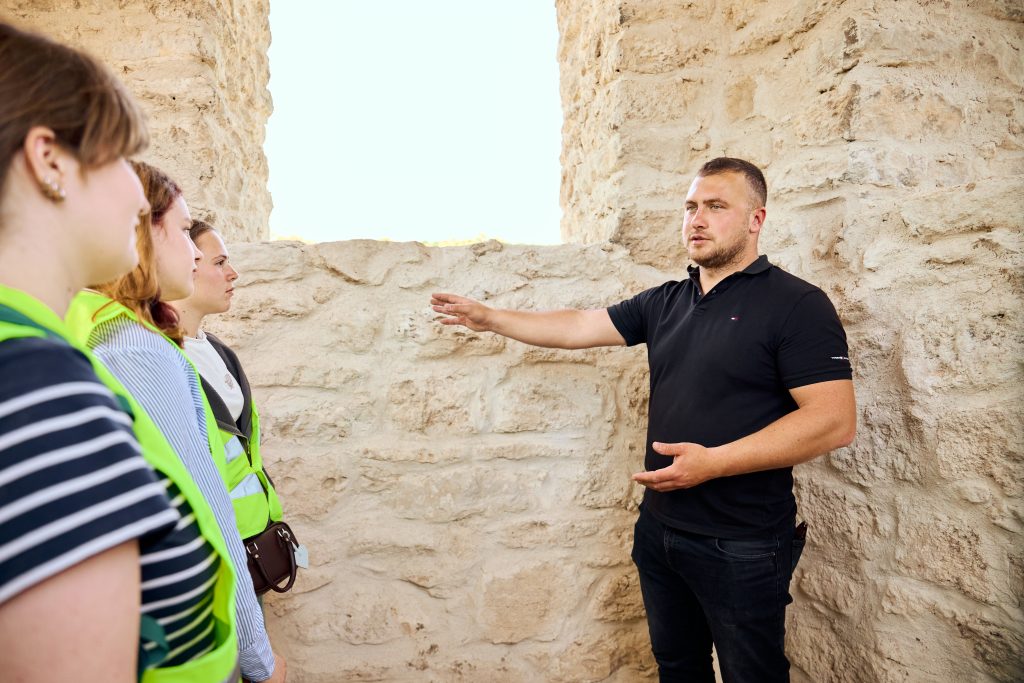
“This will be the first class of students specializing in restoration. We’re glad there’s a demand for this because in the Republic of Moldova we have a lot of heritage that needs to be saved,” explains Anastasia Mozgovaia-Mahnenco, a professor at the Center of Excellence in Construction.
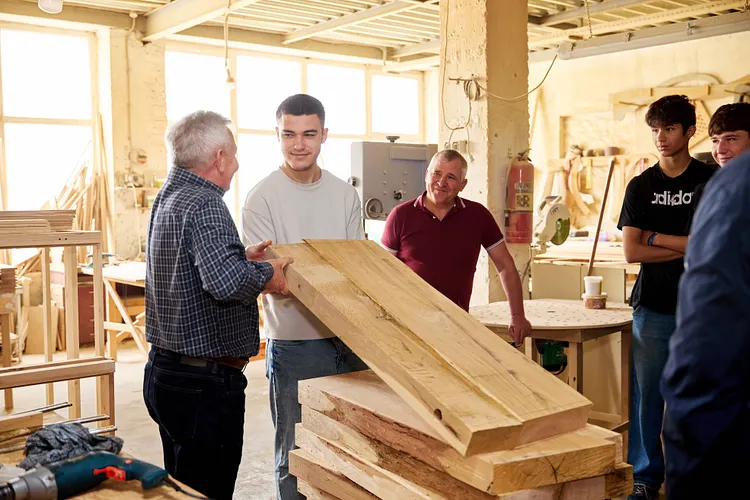
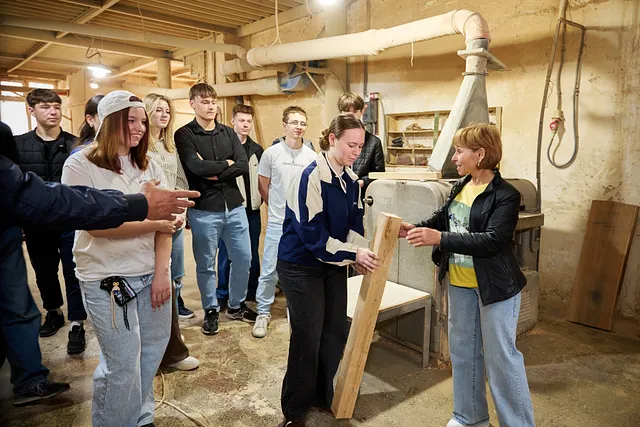
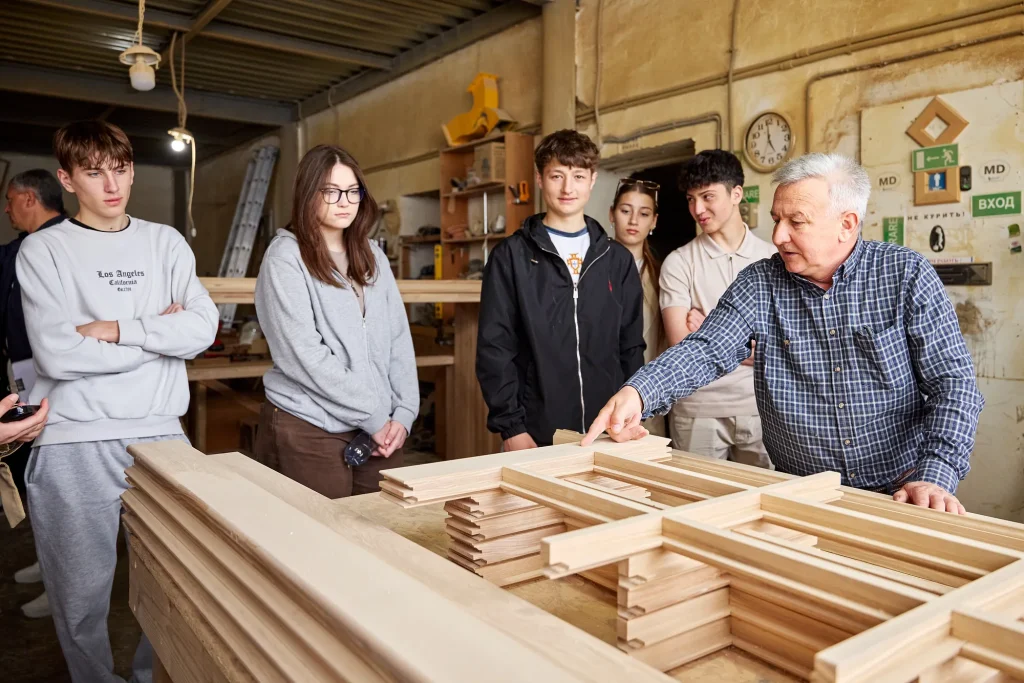
In Chișinău, the students visited a woodworking workshop, where they saw how a piece of wood goes through all the technological processes to ultimately produce the elements needed to build the access path to the Horodiște cave monastery in Țipova. UNDP and the European Union are supporting the development of the access road from Țipova.
On another day, at the bell tower in Vadul Rașcov, currently undergoing restoration by UNDP with financial support from the European Union, the students were given an insight into the region’s history, helping them understand the cultural context.
“My class and I came to Vadul Rașcov to see a beautiful, restored building, but not one restored using modern techniques; instead, traditional materials were used: lime, water, and stone dust. We have many old sites in the Republic of Moldova, and we, today’s students, will become specialists in restoration and will revitalize these historic sites,” said an impressed Cristian Bogaciu, a student.
The workers told the students how they worked on restoring the bell tower in Vadul Rașcov, how they arranged the stones like pieces of a puzzle. They fitted stone to stone to preserve the site’s authenticity, and the joints were filled with just three “ingredients” – water, lime, and stone dust.
Field visits, validating a professional calling
For the young people, this experience was a confirmation of the path they’ve chosen.
Damir Fusu comes from a family where the concept of construction isn’t abstract. “My father owns a construction company, so from a young age I saw how things are built, how people work in this field, and I helped out whenever I could. It’s a risky profession, but it’s nice to know that someone is living in a house you built,” Damir says.
Dina Corolețchi is one of the few women who chose the profession of restorer: “It’s very interesting to breathe new life into a building; when you restore it to its former glory, making it look brand-new while using the same materials from back then and preserving all the memories it holds. I enjoyed today’s field trip because I learned about the history of wood, all the stages it goes through, and how it’s processed.”
Daniel Bulmaga, for his part, says that what he saw with his own eyes exceeded his expectations: “In the theoretical lessons, we mostly saw pictures: what it looks like, how it’s restored, but in real life, it wasn’t until today that I saw the entire restoration process unfold. From what the specialists have told me, it seems like a pretty complicated process; from what I understand, some elements are very, very hard to find, but it’s an interesting field and very well-paid.”
The specialization in construction restoration has been missing from the educational offerings of the Center of Excellence in Construction until now. The qualification was added to the educational institution’s portfolio in 2025.
The study visits were organized with the support of the European Union’s Confidence Building Measures Programme, implemented by UNDP. Similar study visits are planned for students on the left bank as well, with these activities aimed at the professional development of young specialists in the restoration and conservation of cultural heritage on both banks of the Nistru River.
The European Union and UNDP are currently supporting the restoration of four historical cultural heritage sites on both banks of the Nistru River. Since 2020, another 12 cultural heritage sites have been preserved and partially restored, including two flagship projects: the Circus in Chișinău and the Tighina (Bender) Fortress.