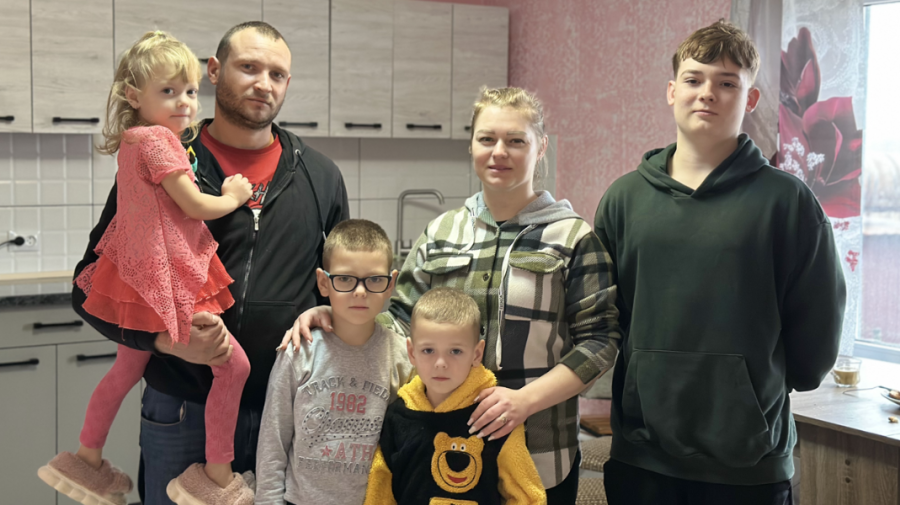
A more energy-efficient home and lower heating costs: the results achieved by the Angheleanu family through the government programme MREEF
The Angheleanu family from the village of Pîrlița, Ungheni district, raising five children, has managed to reduce heating costs and ensure stable thermal comfort in their home following energy efficiency works carried out with the support of the European Union through the government programme Moldova Residential Energy Efficiency Fund (MREEF).
During this cold season, the house retained heat for longer periods, and the need to make a fire decreased significantly. Temperature differences between rooms disappeared, and the indoor environment became more comfortable for all family members.
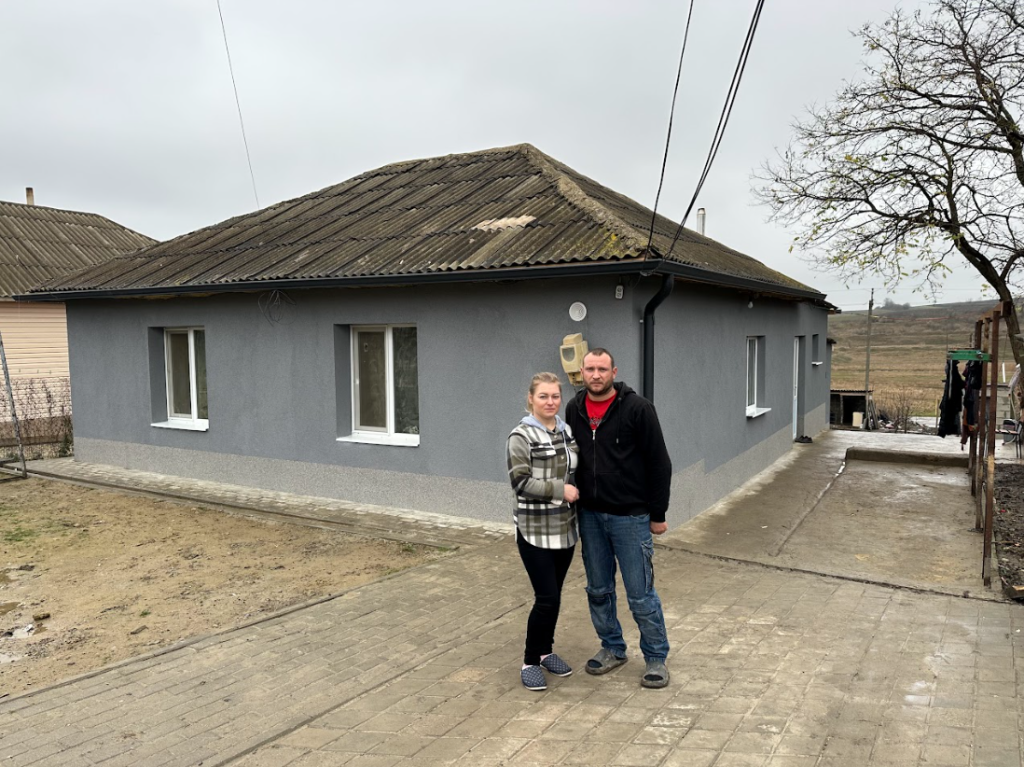
The results were made possible through interventions implemented under a pilot project supported by the European Union and Germany within the government programme MREEF. These included thermal insulation of the exterior walls with mineral wool, waterproofing of the plinth, installation of a rainwater drainage system, and modernization of the heating system. These measures reduce heat loss, protect the house, and contribute to maintaining a healthy indoor climate.
The results are also reflected in last winter’s heating expenses. The family used less firewood, with costs amounting to approximately 15,000 MDL, nearly half compared to previous years. At the same time, the daily effort required to maintain warmth in the house decreased, even though the heated space increased, as the family was able to keep the entire home warm.
“Before, the house would heat up quickly, but it would also cool down just as fast. Last winter, after the insulation works were completed, we would light the fire in the evening, and the next day the temperature would still remain around 25–26°C in all rooms,” says Alexandra Angheleanu.
The works were carried out through the Moldova Residential Energy Efficiency Fund (MREEF), managed by the National Center for Sustainable Energy, with the support of the European Union and the Government of Germany through the project “Energy Efficiency and Renewable Energies for Moldova” (E4M).
For households with a high level of energy vulnerability, the program covers 95% of eligible costs. Of this, 50% is financed by the European Union and the Government of Germany through MREEF, 45% is covered by the Energy Vulnerability Fund, and the beneficiaries’ contribution is 5%.
This support enables families to improve their living conditions, reduce heating expenses, and live in warmer, better-insulated homes.
The first 42 families are already benefiting from more energy-efficient homes, while dozens of other households across the country will receive similar support for more comfortable living conditions and lower energy costs.
For more information, visit: https://cned.gov.md/ro/feerm
The FEERM Program is developed by the Government of the Republic of Moldova with financial support from the European Union, implemented by the National Center for Sustainable Energy and the Ministry of Energy, and supported through the project “Energy Efficiency and Renewable Energies for Moldova” (E4M). E4M is implemented by GIZ in cooperation with the Government of the Republic of Moldova, financed by the Government of Germany and co-financed by the European Union, Norway, and Denmark. This component is funded by the European Union.