A superpower that lasts: Sergiu Mărgineanu and the legacy of EU4Youth
While many young Moldovans remain unaware of alternative education, others know how to turn boring maths formulas into lessons on financial literacy, or find ways to bring environmental issues to life for students. Sergiu Mărgineanu has this very ‘superpower’ – he bridges that gap and demonstrates that learning doesn’t have to be limited to classroom activities.
Together with his colleague, and as part of the EU4Youth Alumni network, Sergiu launched the LEAD project – made up of eight workshops for pupils in the village of Fundurii Vechi, in the Glodeni district of Moldova. Although the EU-funded programme has now come to an end, our ‘superheroes’ continue to teach others.

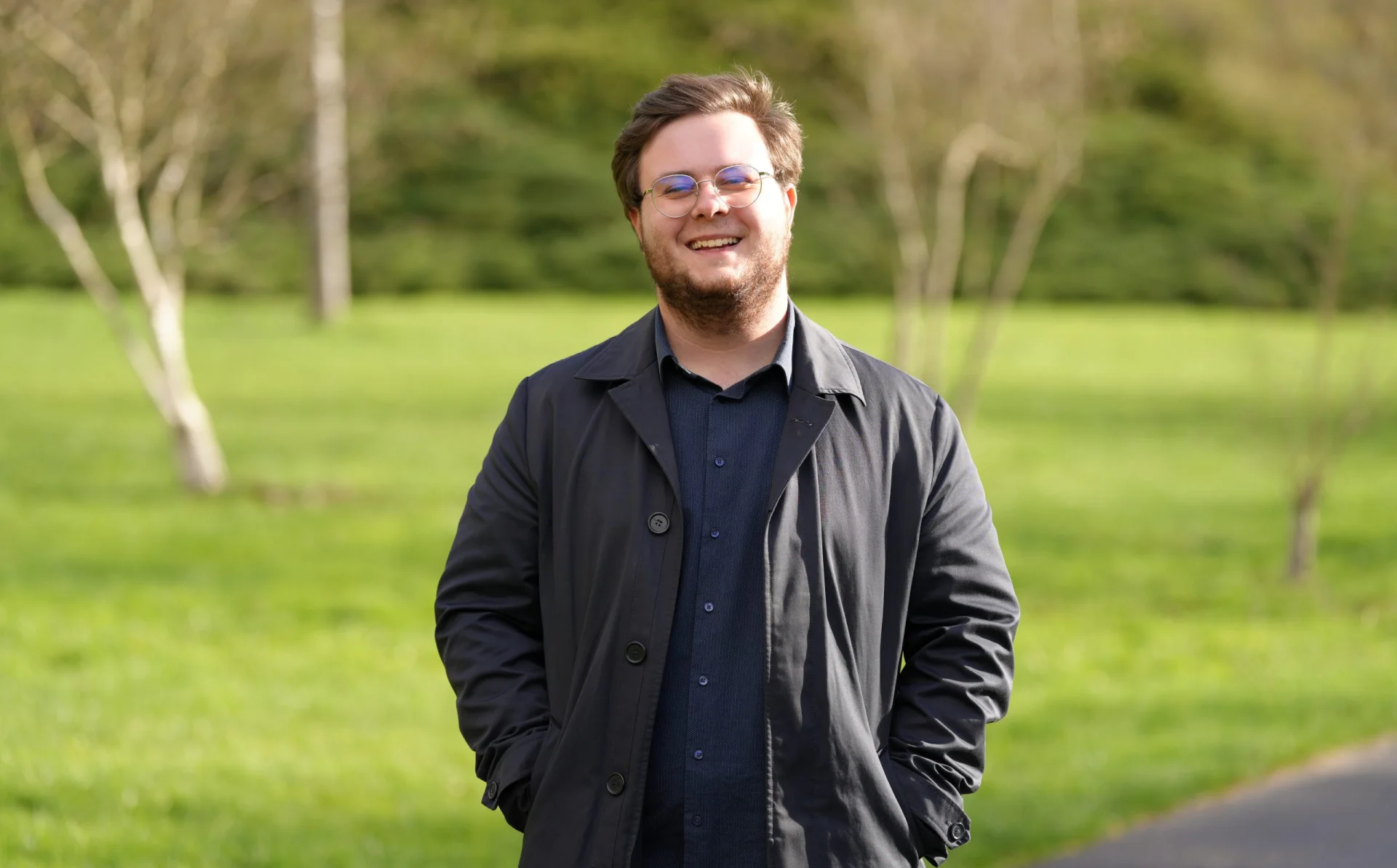
A bit about our titular superhero – Sergiu is 19 years old, and studies at the Faculty of Law of the State University of Moldova and the Law School of the University of Paris 1 Panthéon-Sorbonne. He is also a graduate of the EU4Youth Alumni network, which has nurtured five generations of young leaders in Moldova. This European Union project brought together grant recipients from various EU youth projects, and helped them to implement projects for their peers in their communities, particularly those with fewer opportunities.
“The project lasted almost a year. Young people from the Eastern Partnership countries were given various opportunities and, at the same time, developed initiatives for those in difficult circumstances,” says Sergiu.
‘Young people need a safe space more than anything else‘
Together, Sergiu and his project partner Radu Soltan developed a series of eight workshops, which were held between February and June 2025. The sessions covered communication, mental health, social cohesion, media literacy, and career guidance.
“The formal education system in Moldova isn’t necessarily bad, but young people need to look at education from a different perspective, to learn and discover the world through teaching methods other than those found in schools,” says Sergiu. “Although the youth sector is quite active, not everyone is able to take advantage of such initiatives. We began by identifying the group needs. In our case, we selected 24 pupils from Years 8 and 9 at a school in Fundurii Veche.”

Given the village’s remote location and the fact that pupils had no previous experience of such educational programmes, Sergiu and Radu decided that this opportunity would be beneficial for them. “Once we’d put the group together, we held a meeting with the participants to try to understand their challenges, expectations and aspirations.”
After their first session, with support from their EU4Youth mentor, Sergiu and Radu revised their plan: “We realised that what local young people need most is a safe space where they can feel comfortable, communicate freely and express their thoughts, emotions and opinions. That’s where we started.” Sessions on financial literacy, environment, and career guidance followed later on.
At first, the students felt lost and didn’t understand what was expected of them, recalls Sergiu. “During the first few sessions, they struggled to answer questions. Perhaps they felt uncomfortable because they hadn’t been spoken to in that way before. Another reason was that they didn’t understand the purpose of these sessions. But gradually, thanks to workshops, games and other teaching methods, we managed to establish open and sincere communication.”
Sergiu notes that one of the main outcomes was the effort to identify issues affecting local life and showcase them through a photography exhibition. “We ran a photography workshop, then printed the photos on canvas and displayed them at the school. Although we had originally planned to put them up at the town hall, we realised that the pupils would feel uncomfortable with that for the time being, so we limited ourselves to the school.”
Another significant achievement has been the career guidance sessions. For many participants, this was the first time they had really thought about their future: “At first, they weren’t sure about their plans. Many didn’t know whether they would continue their studies. I’m glad we addressed this issue and worked on it together.”

Sergiu admits that his view of how to work with young people has also changed. “I realised that group dynamics and communication are extremely important, and that is exactly where any educational activity with young people should begin.”
After participating in the incubator – adopting best practices and scaling them up
LEAD was launched thanks to the support of the EU4Youth Alumni network and has been sustained and developed through the participants’ own ‘superpowers’ and collaboration with the youth.md platform. Alongside working directly with 24 students, the project organisers also gained valuable insights into conducting training, mentoring, and different workshop formats. “EU4Youth Alumni helped me look at my activities differently and build a clearer structure for what I do and what I want to achieve together with other young people,” says Sergiu. As chair of the Students’ Club, which manages the youth.md portal, Sergiu and his team are further developing the LEAD initiative: “We want to adopt best practices and scale them up further.”
With the support of youth.md, Sergiu and Radu are now working on a new project, helping young people to develop skills for staying safe online. “We plan to reach young people from eight regions of Moldova. Thirty people will be working directly with us. They will then become content creators and pass on their knowledge within their own communities.”

Sergiu and Radu are developing the curriculum and selecting participants, as well as creating an online course that will be available at any time. “The course can be divided into two topics. The first is how to distinguish true information from false information and develop critical thinking. The second is how to ensure your voice is heard in the media landscape.”
These ideas align with the vision of the youth.md platform, where Sergiu works. The team is currently rethinking its activities with the aim of becoming a trusted platform for young people, where they can find reliable information about opportunities.
A year of participating in the EU4Youth Alumni network has helped not only to develop a successful project, but also to acquire leadership skills that enable the creation of initiatives on a different scale: “We want to continue working with young people and discussing the impact of social media on mental health. And we are looking for other young people who would like to join this mission.”
And what’s your superpower?
Sergiu Mărgineanu’s story has shown that superpowers do exist, and that anyone can develop their own. Have you ever wondered what your superpower is?
To learn more about Sergiu’s superpower, watch this video.
Author: Nicoleta Botnaru