[searchandfilter id=”10843″]

Priority Areas
Regions

Alignment of VAT legislation – hot topic on the agenda of Ministry of Finance

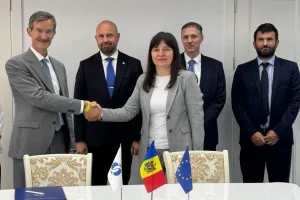
The Ministry of Finance is hosting a four-day seminar dedicated to the transposition of the VAT Directive, bringing together 50 specialists from across the institution to strengthen their technical knowledge and support the alignment of national legislation with European Union standards. The capacity building activity is organized with the support of the EU- and Denmark-funded project ‘Moldova is Europe – Support for EU Integration’.

The topic is high on the agenda of the Ministry of Finance, given its importance for Moldovan business. Clarity on the path towards alignment with EU acquis would support company growth and economic integration making investment decisions and cross-border commerce easier.

The seminar was officially opened by Deputy Secretary General Lidia Ababii, who emphasized the importance of advancing the harmonization of the national fiscal framework with the EU acquis and enhancing the institutional capacities of public administration specialists involved in tax policy development and implementation.

During her opening remarks, Ms Ababii highlighted that the effective transposition of the VAT Directive represents an essential step in the modernization of the tax system and in supporting the country’s European integration agenda.

The training sessions are delivered by the project senior expert Adriana Nutu, who provides participants with in-depth guidance on the principles, mechanisms, and practical aspects related to the implementation of the VAT Directive. The seminar covers key topics including VAT structure and scope, taxable transactions, exemptions, compliance mechanisms, and best practices applied within the European Union.

Over the course of four days, participants will engage in interactive discussions, case studies, and practical exercises meant to strengthen their understanding of the legislative and administrative requirements necessary for a smooth and efficient transposition and application of the Directive.

The seminar is part of the project’s objective to consolidate the capacities of line ministries necessary for the successful implementation of reforms.

Digital Ambassador Programme

The digital campaign #InspireChangeNow, carried out between 30 March and 30 June 2026, is implemented within the INSPIRED Moldova project and aims to encourage youth civic engagement through the creation and dissemination of impactful video content.

Through the Digital Ambassador Programme, young people aged 14 to 35 are invited to address topics relevant to their communities — from participation in democratic processes and combating disinformation to environmental protection and volunteering — thus contributing to building a more informed and engaged society.

Registration Form

| External link

Registration Form

The INSPIRED Moldova project aims to strengthen the role of civil society in Moldova in influencing public policies and to contribute to the country’s European integration. The initiative supports the involvement of civil society organisations in decision-making processes at both national and local levels, including in the digital space, and promotes dialogue and collaboration with public authorities.

The project is implemented by a consortium composed of the European Partnership for Democracy (EPD), the Center for Policies and Reforms (CPR Moldova), the National Assistance and Information Center for NGOs in Moldova (CONTACT), People in Need (PIN), the European Association for Local Democracy (ALDA), and Democracy Reporting International (DRI).

The campaign is carried out with the financial support of the European Union within the INSPIRED Moldova – For civil society engagement in decision-making processes project. The content is the sole responsibility of People in Need Moldova and does not necessarily reflect the views of the European Union.

On May 9, the Great National Assembly Square came alive with the energy, smiles, and enthusiasm of everyone who chose to celebrate Europe Day with us. For one special day, PMAN became more than just a square — it turned into a vibrant hub of friendship, shared values, and European spirit.

Smiles, Energy, and European Spirit: Europe Day 2026 in Chișinău

On May 9, the Great National Assembly Square came alive with the energy, smiles, and enthusiasm of everyone who chose to celebrate Europe Day with us. For one special day, PMAN became more than just a square — it turned into a vibrant hub of friendship, shared values, and European spirit.

Looking back on last weekend, we’re filled with joy seeing how many curious visitors stopped by the EU Delegation and Europe Café tent.

Colourful stamps in the European Passport

We saw dozens of passports carefully and proudly completed. Every stamp collected was more than just a mark — it represented a small discovery along the journey.

You amazed us with your energy at the Energizer Station, where our bikes kept the lights shining thanks to your enthusiasm for a healthy and active lifestyle.

Together, we travelled virtually across the map of Europe and loved seeing your curiosity about the stories, cultures, and traditions of EU member states.

In the kids’ area, we were reminded that teamwork and shared values are the foundation of a strong community — and we shared plenty of laughter along the way!

At the “European Vote” station, hosted by the Young European Ambassadors, you gave us a true lesson in participatory democracy. The colourful voting columns clearly showed the priorities you see for our shared future.

The “Sounds of Europe” and the “Values Wheel” reminded us that, despite our differences, we all speak the same language of freedom, solidarity, and democracy.

A coffee and a kind conversation

Some of the warmest moments happened at the end of the journey. It was a real pleasure to sit down with you over a cup of coffee or tea. The drinks were simply an excuse for meaningful conversations, for hearing your ideas, and for seeing how confidently people in Moldova look toward the European future.

Thank you to our team and friends

None of this would have been possible without our energetic volunteers from the Euro Clubs and EU Information Centres, the inspiring Young European Ambassadors (YEAs), and the support of our partners from EUPM and the European Parliament.

Together, we showed once again that Europe is, above all, about people coming together, collaborating, and supporting one another. Together, we truly are a team.

Europe Day 2026 may be over, but our journey continues every day — through every project, every initiative, and every step we take toward the wider European family.

Thank you for being the main character in our European journey!

“Păcii” and “Prietenii” Streets from Coșnița, Dubăsari district, are becoming models of local infrastructure, with support from the EU and UNDP

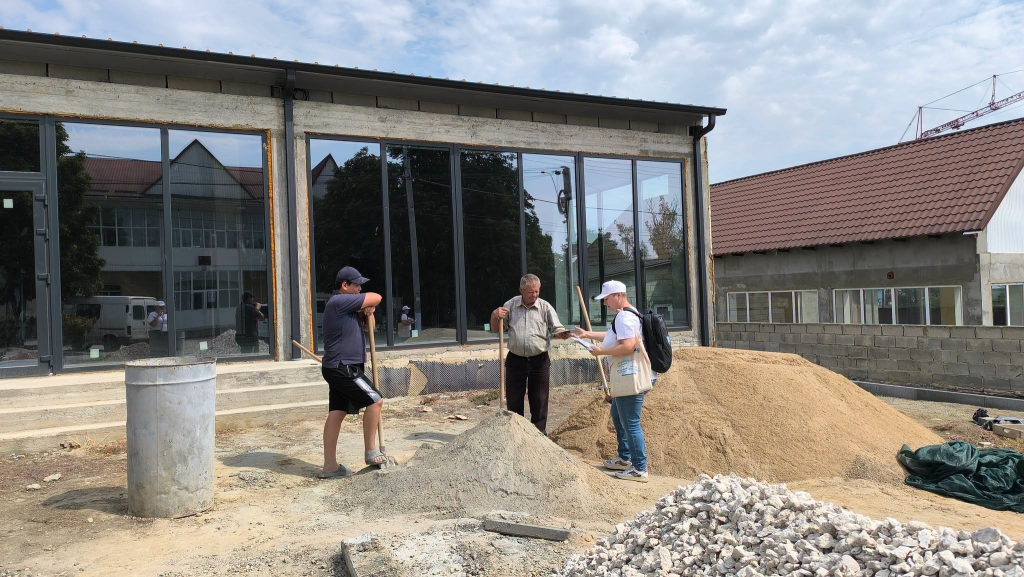
Two streets in the village of Coșnița, Dubăsari district, are becoming models of local infrastructure. With support from the EU Confidence Building Measures Programme, implemented by UNDP, sidewalks covering a total area of over 2,160 m² have been modernized and upgraded. The infrastructure project is the result of a joint financial effort, with the European Union allocating over US$108,000, while the local community provided co-financing of $17,500.

Now, the approximately 6,000 residents, as well as visitors of Coșnița village, enjoy not only the comfort but also the safety provided by the local infrastructure.

“I live on Prieteniei Street, and we had problems because when the children went to school, they couldn’t walk on the sidewalk; they had to walk in the middle of the road. But that was a problem because cars drive fast. Now we have a sidewalk, and it’s nice, it’s for people,” says with joy Elena, a resident of the Coșnița village.

Since the spring of 2024, the village of Coșnița, along with 11 other communities on both banks of the Nistru, has been involved in a participatory process to define development priorities. In their case, the priority was the modernization of the two streets. It was also decided to raise funds, including from the diaspora, to develop the green space on “Prieteniei” Street in the village of Coșnița.

With the money collected by the local community and a contribution from the town hall, 126 trees of three varieties were purchased: Canadian redbud, maple, and catalpa.

“We are absolutely delighted to have had the opportunity to contribute and be part of an initiative that leaves something good and valuable for the people and future generations of the Cosnița community. For our family, our involvement in this campaign stemmed from our love and respect for the place we call home, and the results fill us with pride and gratitude. We thank everyone involved and those who contributed, including financially, to make this beautiful project a reality for our community,” says Inga Cotelea, a native of the village of Cosnița who now lives in the U.S.

One of the six infrastructure projects on both banks of the Nistru River selected to receive support from the EU and UNDP was implemented in Coșnița.

Thus, the European Union and UNDP continue to support improved cooperation between communities on both banks of the Nistru River through joint projects involving local partners, civil society organizations, and other stakeholders.

Strengthening mechanisms for preventing and combating sexual harassment in academia discussed at a national event held in Chișinău

Universities in the Republic of Moldova have taken an important step toward strengthening a safe academic environment following the approval by the Ministry of Education and Research of the Framework Regulation on the prevention, reporting, and intervention in cases of sexual harassment in higher education institutions. The document establishes a clear and effective mechanism for preventing, identifying, reporting, and addressing cases of sexual harassment, both in physical spaces and online environments.

This topic was discussed during the event “Mechanism for Prevention and Response to Sexual Harassment in the University Environment: Results and Perspectives,” held on Wednesday, April 29, in Chișinău.

“On April 29, when the international community marks Denim Day, we send a clear message to everyone: we declare zero tolerance for any form of abuse. Data show that this phenomenon exists, which is why we must all be trained to prevent abuse. Victims are usually stigmatized, therefore I believe that reporting a case of sexual violence is an act of great courage. This is the spirit in which we must educate and raise the younger generation — to be more aware of what is happening around us, with our colleagues and fellow citizens,” said Adriana Cazacu, State Secretary at the Ministry of Education and Research.

The event brought together representatives of the Ministry of Education and Research, UN Women Moldova, the Delegation of the European Union to the Republic of Moldova, higher education institutions, and the International Center “La Strada.”

UN Women Moldova Country Representative Dominika Stojanoska highlighted the essential elements of an effective mechanism: “A credible mechanism means that the rules are known to everyone; reporting channels are accessible; procedures are prompt, impartial, and victim-centered. Equally important is prevention through training, communication, and fostering a culture of respect.”

Reaffirming the commitment to promoting a safe educational environment, Stephen Stork, Head of Finance Section at the Delegation of the European Union to the Republic of Moldova, stated: “Sexual harassment undermines equality, dignity, and the quality of education. The European Union supports a zero-tolerance approach and is committed to ensuring that higher education environments are safe, inclusive, and respectful for all.”

In the same spirit, civil society organizations emphasized the collaborative nature of the process. “For us, the approved document represents the result of sustained efforts in analysis, consultation, and cooperation, but above all a firm commitment to protecting the dignity, integrity, and rights of every member of the university community,” said Cristina Deliu, Program Director at the International Center “La Strada.”

Participants discussed the experiences of institutions involved in developing internal prevention and response mechanisms, highlighting good practices and lessons learned during the implementation of the Framework Regulation on the prevention, reporting, and intervention in cases of sexual harassment in higher education institutions.

Practical recommendations were also formulated to strengthen an institutional culture based on zero tolerance for harassment and gender-based violence.

The event was organized under the auspices of the Ministry of Education and Research by UN Women, in partnership with the International Center “La Strada,” with financial support from the European Union and the Government of Denmark.

During 2025–2026, 129 students, 123 teachers, and auxiliary staff members from five higher education institutions across the country received training on preventing and combating sexual harassment and gender-based violence.

It should also be recalled that in 2024, the Ministry of Education and Research launched the annual national study on academic integrity in universities in the Republic of Moldova in order to obtain updated data on the perceptions and experiences of students and academic staff, including issues related to sexual harassment in the university environment.

Bureau of European Integration staff strengthen their skills with the support of ‘Moldova is Europe’ experts

Efficient coordination of EU affairs is vital not only before accession, but also after the country becomes a member state: this was the motto of the training delivered by ‘Moldova is Europe – Support for EU integration’ expert Andrej Engelman to about 40 representatives of the Bureau for European Integration.

The discussion focused on coordinating the participation of Moldovan administration representatives in the work of comitology committees in the period leading up to Moldova’s accession to the EU.

The second part was dedicated to the coordination of EU affairs in the context of membership, where the country primarily focuses on its activities within the Council. The reasons for setting up a new coordination system were presented, along with the essential characteristics and decisions regarding the role of individual institutions that the country must adopt.

The “Slovenian model” for coordinating EU affairs was also presented, along with the future needs regarding experts who will work in the central unit for coordinating EU affairs and the future Moldovan Permanent Representation to the EU in Brussels following accession.

Participants were also familiarized with potential challenges facing candidate countries in the period between the conclusion of negotiations and the signing of the accession treaty on the one hand, and actual accession to the EU, on the other.

The delivery of the training was supported by EU- and Denmark- funded project ”Moldova is Europe – Support for EU Integration”

Let’s celebrate Europe Day together! On May 9, 2026, the Great National Assembly Square (PMAN) will turn into a vibrant European hub — and the Europe Café team can’t wait to welcome you to the most interactive tent at the event.

Your Journey Through Europe Starts in the Great National Assembly Square: Join Us for Europe Day 2026

Let’s celebrate Europe Day together! On May 9, 2026, the Great National Assembly Square (PMAN) will turn into a vibrant European hub — and the Europe Café team can’t wait to welcome you to the most interactive tent at the event.

This year, you won’t just visit the EU — you’ll experience it. Under the theme “Journey Through Europe,” we’ve created an immersive adventure where you become the main character.

Your Passport to Prizes

As soon as you enter the EU Delegation & Europe Café tent, you’ll receive your very own “European Passport.” Your mission? Explore each themed station, collect stamps along the way, and receive a personalized EU-themed gift at the end of your journey.

6 Stations. 6 Unique Experiences

Each stop is designed to be interactive, fun, and absolutely worth sharing on your feed:

1. Energizer Station – I Love EU Energy Bike
Hop on the bike and generate electricity by pedaling to light up a bulb! A fun challenge that promotes healthy living and sustainable energy.

2. Information Station
Take a virtual trip across Europe and discover EU countries, cultural landmarks, fun facts, and EU-funded projects that connect us all.

3. Jenga & Kids Corner
A playful space for teamwork, games, and activities for visitors of all ages.

4. Your European Voice – Q&A Bullet Station
Your opinion matters! Join an interactive and colorful polling experience where your voice becomes part of the conversation.

5. YEAs Station – Sound of Europe & Brainbox
Together with the Young European Ambassadors (YEAs), discover Europe’s linguistic and musical diversity through interactive listening activities and games.

6. EU Values Wheel Station
Spin the wheel and tell us what solidarity, democracy, and freedom mean to you. Complete your passport here and collect your reward!

After visiting all the stations, take a break and enjoy a tea or coffee with the Europe Café team.

Special Guests & Good Vibes

We’ll be celebrating alongside partners, colleagues, and friends! You’ll also get the chance to meet the EUPM (EU Partnership Mission in Moldova) team and learn more about the role of the European Parliament from its representatives.

Our colorful and lively space will be animated by volunteers from EuroClubs, EU Information Centres, and the Europe Café team.

See you on May 9, 2026, at the EU Delegation & Europe Café tent in PMAN! Come discover the values that bring us together and the opportunities that help shape our future.

The awareness campaign on internship opportunities for youth reaches Balti: Prime Minister Munteanu encourages young people to apply

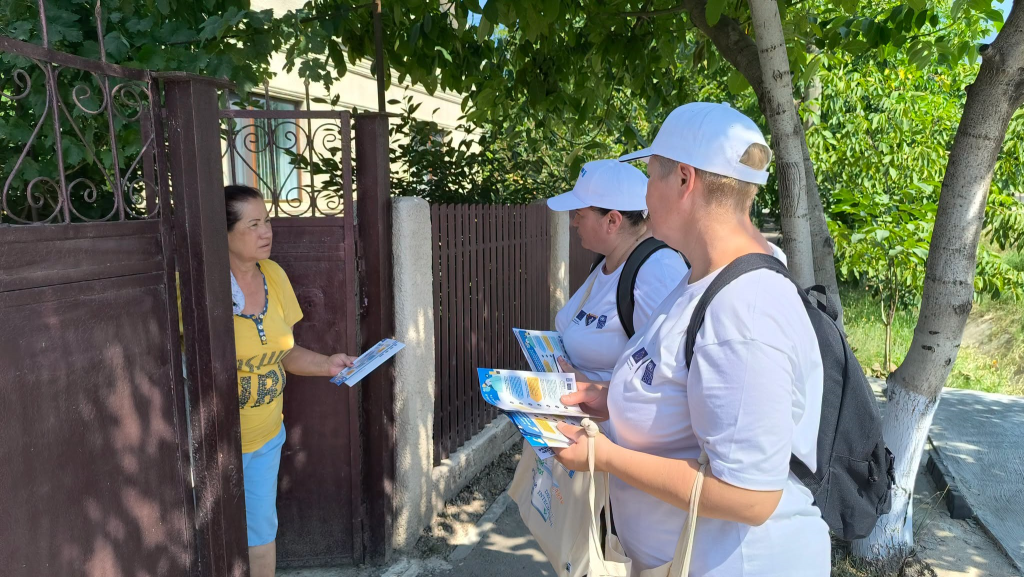
The nationwide awareness campaign for the fifth edition of the Joint Internship Programme of the European Union and the Government of the Republic of Moldova reached the north of the country on 7 May. Over 160 students of the ‘Alecu Russo’ Bălți State University learned about the conditions to apply for paid internship opportunities in Moldova’s state institutions and the benefits that come with them.

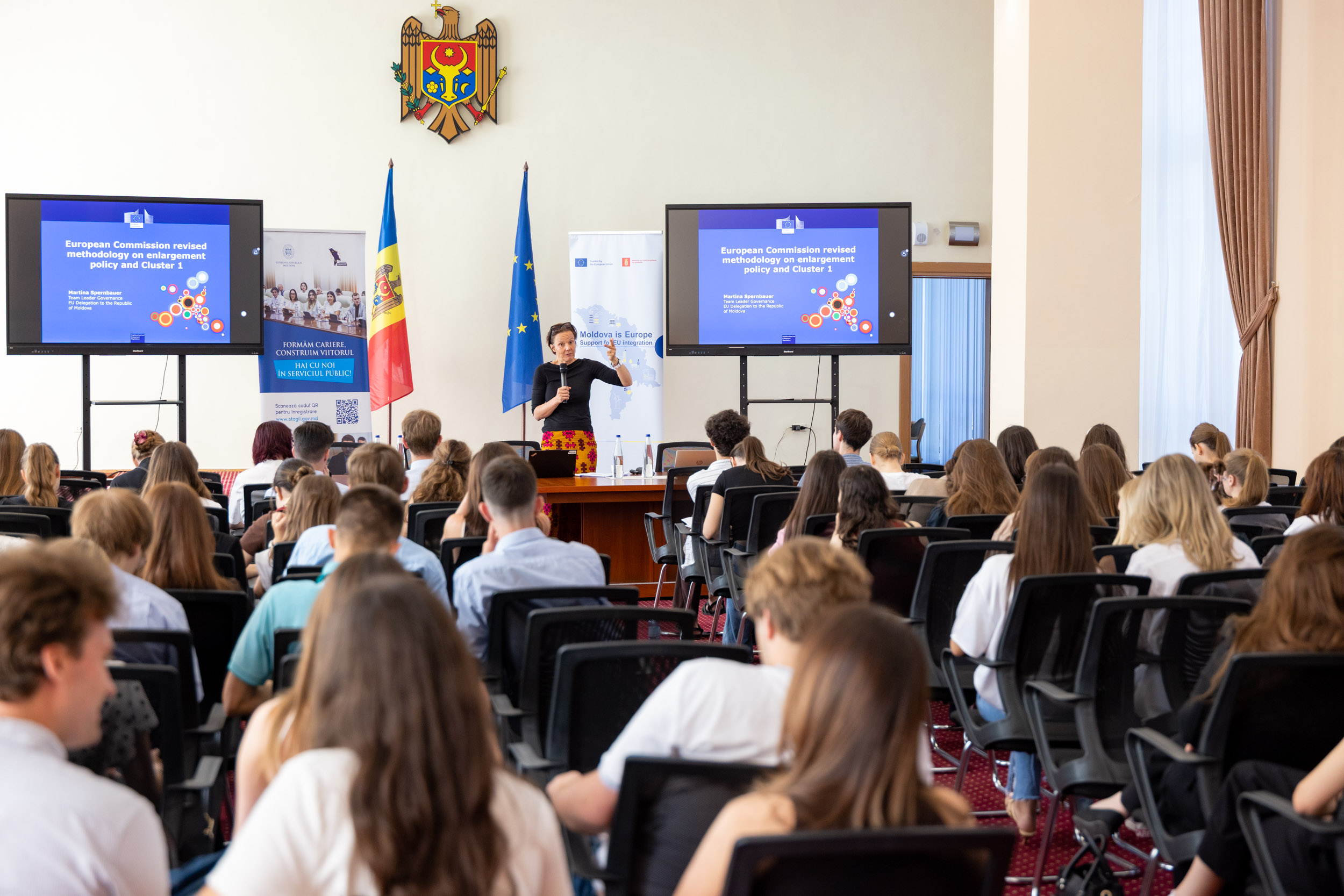
The speakers of the event, Alexandru Munteanu, Prime Minister of the Republic of Moldova, Martina Spernbauer, Team Leader for Governance at the EU Delegation shared their professional journeys and perspectives on what it means to work in public administration and encouraged through their examples the young people to apply for the Internship programme.
Students, master’s students and recent graduates up to 30 years old can apply to spend two summer months working inside Moldova’s central public institutions. Each intern receives a monthly allowance of 250 Euro, funded by the European Union and Denmark. Graduates who complete an additional third month of internship in the same institution may apply for a civil service position there without competition and without a testing period — a benefit granted by the legal framework in the field of internships.

To apply: Submit a CV and motivation letter to stagii@eu4moldova.eu by 15 May 2026. Shortlisted candidates will be invited for an interview with a Committee composed of national and international officials.

The internship runs 1 July – 28 August 2026, full-time, with physical presence in a central public institution. Certificates will be awarded after the completion of the programme. Full details and the programme regulation are available at: www.eu4moldova.eu/support-for-eu-integration/#internship
Over 200 students took part in the previous four editions of the Programme, many of them now employed in the civil service. The nationwide awareness campaign for this year’s EU-Moldova Internship Programme  continues with a dedicated online session for young Moldovans in the diaspora on 14 May.

The Internship Programme is taking place in the framework of the EU- and Denmark- funded project ”Moldova is Europe – Support for EU Integration”.

Warmth beyond well-insulated walls: transforming lives at a care home in northern Moldova

In a small community of Bădiceni in northern Moldova’s Soroca district, the Elderly Care and Assistance Centre ‘Acasă’ (“At home” in Romanian) is more than an institution − it is home to fifty older people and persons with disabilities who depend on it every day. For years, life inside the ageing 1960s building was defined by cold rooms, damp walls and outdated facilities that struggled to provide comfort. With EU support, a local NGO, the Centre of Social Assistance ‘House of Hopes’ has responded to this challenge by stepping in with more than just ordinary repair works. Together with improving the building’s energy efficiency, it is strengthening care services to offer a more dignified and fulfilling life to its residents.

Mihail Scutari (44) arrived at the Acasă Care Centre four years ago. Living with a disability, he had previously depended on his family – along with his brother, who also has a disability – in their home city of Soroca. After their parents’ death, their sister was no longer able to provide the level of care they needed. “First, I was brought to the centre, and after about half a year, my brother also came,” he recalls. “At home, I was mostly alone. Here things are different − I can interact with others, talk with people, take part in activities, and I feel more engaged.

For many residents, the Care Centre has become their permanent and only home. Some elderly people arrived after losing family support; others came with serious health problems or disabilities, depending not only on daily care, but also on emotional and psychosocial support. “When I first came, my health was very weak,” says Valentina Morari (69), who had been living alone. “Over time, with proper care, treatment and regular meals, my condition improved. Now I feel much better, and I’m comfortable here.”

Cold rooms, lost heat: a targeted intervention to protect residents

The Care Centre operates in the building of a former hospital, originally constructed in the 1960s. It underwent a major reconstruction in 2009, that allowed it to increase the capacity of the centre from 26 to 50. But the years that followed gradually erased those gains, leading to significant heat loss, humidity and outdated infrastructure. “Heating was our biggest challenge,” says Angela Brighidin, the Centre’s director. “We rely on a firewood and coal heating system that requires constant manual operation. The indoor temperature was unstable, especially at night. An energy audit showed that we were losing nearly 30% of heat due to poor attic insulation.

The House of Hopes NGO stepped in during 2025, with EU support channelled through the Soros Foundation, in partnership with Keystone Moldova and the Social Innovation Fund from Moldova. The infrastructure works focused on improving the building’s energy efficiency through attic and wall insulation, alongside upgrading essential equipment, including furniture and household appliances. “After the insulation works, for the first time in 20 years, our staff were working in short sleeves and beneficiaries could sleep comfortably,” says the director. “And the money saved on heating can now be redirected to the needs of our residents.”

Beyond repairs − rebuilding everyday life 

The transformation did not touch the building only. “Our beneficiaries needed more than just physical warmth − warmer rooms or walls − but a sense of human warmth as well,” says Valentina Onică, head of the House of Hope NGO. “That’s why we also focused on improving the quality of care and the activities offered to them.”

Valentina Onică

The Care Centre’s staff received training and mentoring on various aspect of the ageing process, communication skills in care settings, interaction techniques and relationship-building with elderly persons and persons with disabilities. In addition, they were able to upgrade internal working practices and documentation, developing individualised care and structured activity plans to bring more consistency and purpose to daily life.

We introduced physical exercises, crafts, games, singing, more group interaction,” explains Aliona Stratan, social assistant at the Care Centre. For residents, these activities are not secondary to care − they are central to it, serving as moments of emotional connection and shared memory. One of the most memorable moments was a Mărțișoare workshop (a traditional spring craft activity), organised by House of Hope at the Care Centre’s main hall. Red and white threads and simple materials were placed on the tables, and residents were guided through a tradition many had not practised for years. As they worked, conversations turned to earlier springs, childhood memories and people they once shared these gifts with. Some recited poems, others shared memories. “When we were leaving, the residents hugged us and thanked us for coming. It was a very warm and emotional moment – one that moved many of us to tears,” recalls Valentina Onică.

For the Care Centre’s staff, too, the change was significant. Trainings and mentoring reshaped not only procedures, but attitudes, encouraging them to spend more time with the residents, engage more actively and build stronger relations. This shift is visible in small gestures, like calling residents to join activities, helping someone complete a craft or simply sitting and talking longer than before. “There is now more patience and understanding between residents,” notes the social assistant. “They make friends and interact more easily.”

From energy-saving building to energy-saving community

The NGO’s activities didn’t stop at the Care Centre’s gate.

Expanding the concept of energy efficiency, House of Hope reached into the wider community of Bădiceni. Through workshops, school and kindergarten activities and public outreach, residents learned that simple daily habits not only help to save energy but also cut energy bills. 

To mobilise the community, we launched a competition to reward households that achieved the highest electricity savings,” shares Tatiana Coșciug, Bădiceni Community social assistant. Participants were asked to track their electricity bills over three months and compare them with the same period from the previous year, turning everyday consumption into a simple measure of progress. Twenty-four households joined the challenge, and ten families who showed clear savings received useful rewards – microwave ovens. 

We started with simple changes, like switching to LED bulbs, unplugging devices or not leaving the TV on when not watched,” says Cătălina Brigidin, one of the winners. “In just a few months, our electricity bill dropped from about 400 MDL to 200–250 MDL – a 30-40% reduction from simple daily habits! And even after the competition ended, we continue to follow them.

In Bădiceni, energy efficiency has become more than a technical upgrade. It has turned into a way of improving lives, both inside the Care Centre and beyond it. The work of House of Hope shows how EU funding can spark a community transformation, where a warmer building also means greater human warmth and a stronger sense of unity.

Authors: Volha Prokharava, Igor Ciurea

The Many Faces of Womanhood: photo exhibition bringing women’s stories from Armenia, Georgia, Moldova, and Ukraine opens in Brussels

On 8 May, the outdoor photo exhibition ‘The Many Faces of Womanhood’ will open at Mont des Arts in Brussels, Belgium, showcasing portraits and stories of women from Armenia, Georgia, Moldova, and Ukraine.

‘The Many Faces of Womanhood’ presents a series of intimate portraits and personal stories that reflect the complexity of women’s experiences across the Eastern Partnership region. From navigating war and displacement to reshaping communities and expectations, the women featured in the exhibition embody resilience, agency, and leadership.

The exhibition is part of the European Union-funded programme ‘EU 4 Gender Equality: Together against gender stereotypes and gender-based violence’, jointly implemented by UN Women and UNFPA.

Since 2020, the programme has been working across Armenia, Georgia, Moldova, and Ukraine to challenge discriminatory social norms and promote equal rights and opportunities for women and men. It focuses on how expectations around gender are formed – at home, at work, and in public life – and how they can limit potential or reinforce inequality.

By placing individual stories at the centre, the exhibition translates these efforts into human experiences, showing how change happens not only through policy, but through everyday decisions and actions.

The official opening will bring together representatives of European institutions, the United Nations, and the creative voices behind the project, including Adrienn Király, Director for Neighbourhood East and Türkiye, Directorate-General for Enlargement and the Eastern Neighbourhood (DG ENEST), European Commission, Olga Ivaschenko, Ukrainian photojournalist and author of the exhibition, and Alisa Kovalenko, documentary filmmaker, human rights advocate, and participant featured in the exhibition.

Visitors are invited to explore the exhibition from 8 May to 14 June 2026 at Mont des Arts in Brussels. 

The online exhibition is available by the link.

Find out more

Press release

Call for Proposals: Financial Support for Organisations increasing Resilience and Media Literacy of Moldovan Young People

1. Introduction

These guidelines provide detailed information for organisations wishing to apply for financial support under this Call for Proposals. The funding aims to strengthen youth’s resilience to disinformation and foreign information manipulation and interference (FIMI) in Moldova by conducting and supporting activities focused on media literacy, critical thinking, and awareness-raising on disinformation and FIMI.

Applicants are advised to read these guidelines carefully before preparing their proposals. Applications that do not comply with the requirements outlined in this document will not be considered.

2. Objectives of the Call

The overall objective of this Call for Proposals is to strengthen youth resilience in Moldova to disinformation and foreign information manipulation and interference (FIMI) by enhancing media literacy, critical thinking, and awareness among young people.

The specific objectives are to:

  • Promote media literacy and critical thinking among young audiences through engaging formats
  • Increase awareness of disinformation and FIMI through events, collaboration with trained experts, and online content
  • Strengthen young people’s ability to identify, understand, and resist manipulative narratives

3. Eligibility Criteria

To be eligible, applicants must meet the following criteria:

  • Be a non-profit, non-governmental organisation registered in Moldova
  • Have at least one (1) year of continuous activity
  • Be non-partisan and not affiliated with any political parties
  • Maintain a transparent leadership and governance structure
  • Be committed to EU values (Article 2 TEU)
  • Be willing to sign a declaration confirming no involvement in fraud, corruption, or funding from non-democratic regimes

4. Eligible Activities

Proposals must focus on activities that contribute to the objectives of this call. Examples include:

  • Organisation of events and activities in collaboration with trained young people, in particularly with “Disinfo-gurus” – participants of Youth Resilience Camps. (One camp was organised in August 2025 and another will be organised in the summer).
  • Creation of engaging online content (e.g. social media, videos, campaigns) on disinformation, FIMI, media literacy and critical thinking.
  • Community-based activities, including in the regions, that foster critical thinking and awareness to disinformation and FIM among young people and build their societal resilience.

5. Financial Support

  • Grant value: EUR 5,000.
  • Number of grants to be awarded: 1.
  • Period of implementation – from June to maximum the end of November, followed by an additional two weeks dedicated to reporting. 
  • Disbursement: 90% will be disbursed upon contract signature, and 10% upon satisfactory completion of activities and submission of final deliverables. A no-cost extension of up to 1 month may be granted, if justified.
  • Eligible costs include staff, content production, dissemination, equipment, travel, and other direct project-related expenses.
  • Indirect costs (overheads) are allowed up to 7% of the total budget.
  • Co-financing not required but possible – the funding may compliment already ongoing projects funded by donors other than European Union.

6. Application Process

Applications must be submitted by email to opencalls.moldova@globsec.org no later than on May 17, 2026. Late or incomplete applications will not be considered. Please use email subject line: “Youth Grant Application – [Organisation Name]”.

Applicants must submit the following documents:

  1. Application Form – Submit as PDF. The template can be found below for download.
  2. Supporting documents: Registration certificate (scan signed by an authorised representative)

7. Clarification Period

Applicants may submit questions regarding the call and its requirements by email to opencalls.moldova@globsec.org until May 12, 2026. An online clarification session will be organised on the same day, with the link redistributed to all interested applicants.

8. Evaluation of Applications

The evaluation will take place in two stages:

  1. Eligibility and Administrative Check: ensuring applications meet all formal and eligibility criteria.
  2. Technical Evaluation: conducted by an independent Evaluation Committee using a scoring grid.

Applications will be assessed against the following criteria:

  • Relevance to the objectives of the Call (30%).
  • Outreach potential and expected impact (25%).
  • Innovativeness and creativity of the proposed activities (20%).
  • Relevant Experience (15%).
  • Feasibility and sustainability (10%).

Only one highest-ranked application will be selected for funding.

9. Contracting and Implementation

Selected applicants will sign a grant agreement specifying activities, deliverables, financial terms, and reporting requirements.

Beneficiaries will be required to submit:

  • Progress reports describing activities carried out and results achieved.
  • Financial reports documenting the use of grant funds, with supporting evidence.
  • Evidence of outputs (e.g., links to produced outputs, pictures from events, campaign screenshots).

10. Visibility Requirements

All funded content must acknowledge EU financial support and follow EU visibility rules. Logos and disclaimers will be provided to grantees. Derogation from contractual visibility obligations is permitted in exceptional situations. For example, security issues or local political sensitivities may make it preferable or necessary to limit visibility activities in certain regions or during certain periods. In such cases, a proper argumentation should be submitted for issuing EU visibility waiver.

11. Timetable

  • Publication of the Call: Beginning of May
  • Clarification period: until May 12
  • Deadline for submission: May 17
  • Eligibility and evaluation: by June 1st
  • Notification of results: beginning of June
  • Contracting: beginning of June
  • Project implementation: from June to maximum end of November 2026 plus 2 weeks for reporting

EXTENDED CALL for agri-food SMEs in the Republic of Moldova to access an Integrated Capacity Building and Investment Support Programme

The agri-food sector is an important pillar of the economy of the Republic of Moldova, yet it continues to face low productivity, limited processing capacity, and restricted access to competitive markets.

SMEs in the sector face a lack of managerial and technical capacities needed to leverage investments and increase the added value of their products.

The project “Sustainable Agri-Food Systems – Business”, funded by the European Union and implemented by Solidarity Fund PL in Moldova, addresses these challenges through an integrated approach that combines capacity development with investment grants to support competitiveness and integration into value chains.

General information about the call

The call is aimed at supporting agri-food SMEs through an integrated development programme that combines capacity building with investment support for business modernisation and increased competitiveness.

The programme will contribute to strengthening value chains by developing SMEs’ operational, financial, and managerial capacities, aligning them with international quality standards, and facilitating access to high value-added markets.

Priority will be given to initiatives focused on sustainable agriculture and climate-smart solutions, especially within seed-sector value chains. Particular attention will be paid to initiatives promoting the use of drought- and flood-resistant seed varieties developed and/or adapted to the eco-climatic conditions of the Republic of Moldova.

The programme is designed so that capacity building serves as the foundation for enterprise development, while investment support and technical assistance facilitate integration into value chains and long-term competitiveness growth.

The support provided under the programme is structured into five main components:

Component 1. Operations and Financial Management

Component 2. Investment Grants

Component 3. Certifications and Quality Standards

Component 4. Branding and Marketing

Component 5. Fairs, B2B and Market Access

Access to support will take place through a two-stage process:

Stage I – selection of up to 50 SMEs for capacity-building activities and business plan development (Component 1);

Stage II – selection of up to 30 SMEs from Stage I beneficiaries to receive investment grants and specialised support (Components 2–5), depending on their needs.

The grants finance investments in the modernisation of processing, packaging, storage, digitalisation, and operational efficiency capacities. The maximum grant amount is up to EUR 20,000 per project and is awarded to SMEs that complete Component 1 and meet the participation requirements.

The call is open to:

  • Enterprises registered and operating in the Republic of Moldova in accordance with applicable national legislation;
  • Enterprises operating in the agri-food sector and carrying out or planning activities related to processing, storage, sorting, or packaging exclusively for field crop seeds and derived products, including organic products, excluding fruits, vegetables, and melons. Priority will be given to initiatives promoting the use of drought- and flood-resistant seed varieties — such as maize, hemp, sorghum, and cover crops — adapted to the diverse eco-climatic conditions of the Republic of Moldova. Activities involving the processing of other plant parts, such as industrial hemp stalks, will also be considered;
  • Enterprises classified as SMEs in accordance with Law No. 179 of 21.07.2016, as subsequently amended and supplemented, including Law No. 317 of 17.11.2022;
  • Enterprises with at least 2 (two) years of activity;
  • Enterprises with a clearly defined investment idea aimed at modernisation or increasing added value;
  • Enterprises demonstrating interest and commitment to participate in all stages of the programme, including training activities, consultancy, and investment implementation.

To apply for this Call for Proposals, eligible entities must complete the electronic application form through the Jotform application: Application Form.

More information regarding the call, eligibility criteria, submission procedures, and evaluation process can be found in the Terms of Reference and its annexes.

Deadline for submission of applications: 11.05.2026, inclusive.

Should any questions or clarifications regarding the call arise, please send an email to: natalia.cretu@solidarityfund.pl (for questions related to Components 1, 3, 4 or 5 – SME capacity building) or vitalie.ababii@solidarityfund.pl (for questions related to Component 2 – investment grants), no later than 7 days before the application deadline. Answers will be published on the official SFPL Moldova webpage in the Q&A section 3 days before the submission deadline.

Awareness raising campaign of the Internship Programme continues in the Academy of Economic Studies

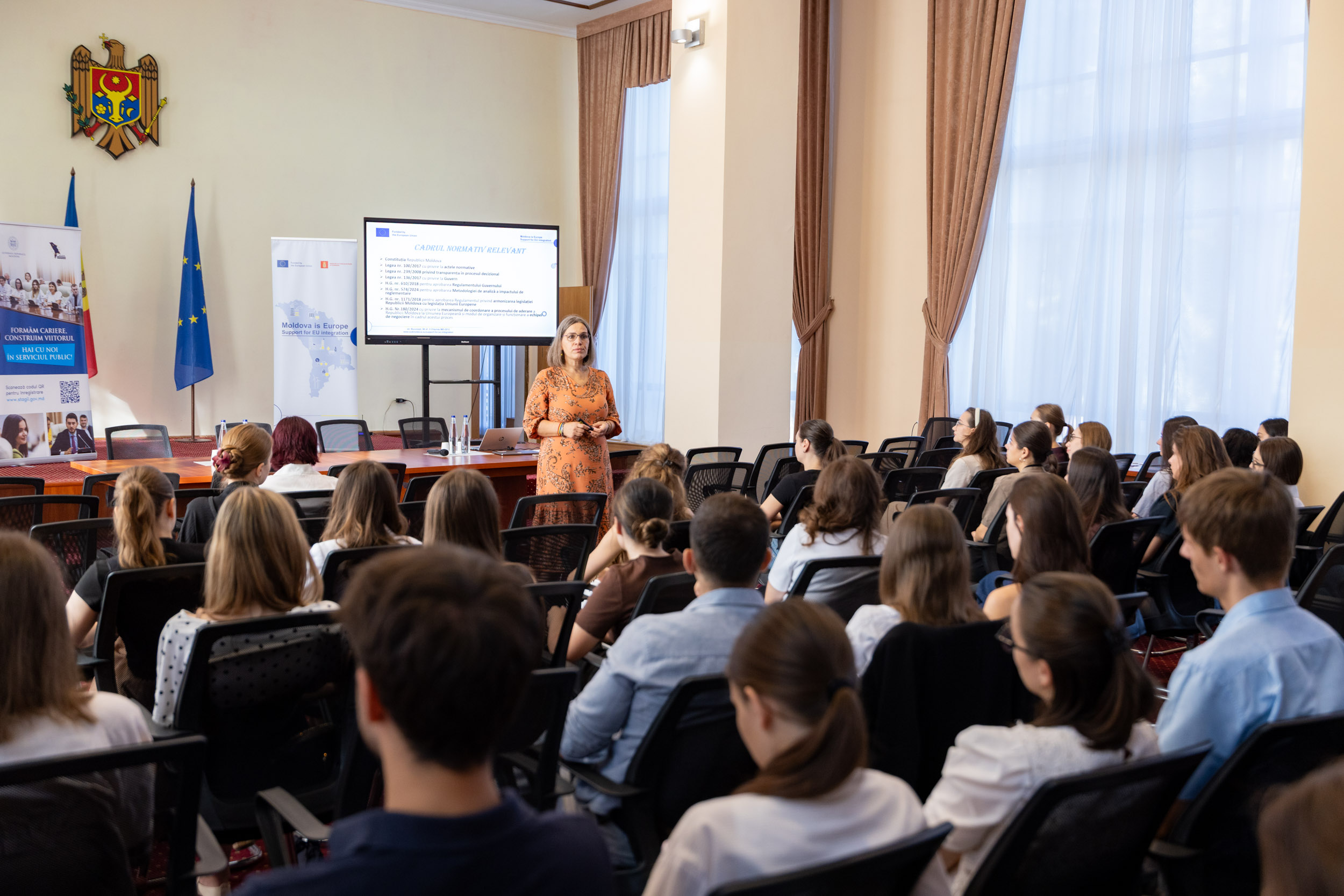
The awareness campaign on internship opportunities for youth continued today in Chisinau, bringing together almost 100 students at the Academy of Economic Studies of Moldova (ASEM). Students discovered how their knowledge in economics and international relations can be combined with professional experience within Moldova’s public service, by joining the fifth edition of the Joint Internship Programme of the European Union and the Government of the Republic of Moldova.

The event featured motivational speeches from European and Moldovan officials who stressed the importance of involving young people in shaping public policies and contributing to Moldova’s EU integration process. Graduates of previous editions of the Programme, who are currently working in the public administration, shared their experience of gaining practical experience during the Internship and how it helped them start their careers as civil servants.

Participants were invited to apply for the fifth edition of the joint Internship Programme, which offers two months of practical work within public institutions. Interns will receive a monthly allowance of 250 Euro, funded by the European Union and Denmark. Graduates who complete an additional third month of internship in the same institution may apply for a civil service position there without competition and without a probationary period — a benefit granted by the legal framework in the field of internships.

Applications are open until 15 May 2026. Candidates should send their CV and a motivation letter to stagii@eu4moldova.eu. Further details are available at: www.eu4moldova.eu/support-for-eu-integration/#internship

The awareness campaign will continue on 7 May at the ‘Alecu Russo’ Bălți State University and will conclude on 14 May with an online session for Moldovan students from the diaspora and others unable to attend in person.

The Internship Programme is taking place in the framework of the EU- and Denmark- funded project ”Moldova is Europe – Support for EU Integration”.

‘Young European Communicators’ School’: 40 young people from Euro Clubs learn to turn information about the EU into digital campaigns

How can European values, the opportunities offered by the European Union (EU), and the European path of the Republic of Moldova be explained in a clear, creative and relevant way for young people? This was one of the central questions of the “Young European Communicators’ School”, held from 1 to 3 May 2026 as part of the “EU Accelerator 3.0” programme.

The event brought together 40 young members of Euro Clubs and EU Information Centres, along with their coordinators, for a training programme in strategic and digital communication. Over three days, participants learned how to analyse perceptions in their communities, identify myths and false information about the EU, develop data-based messages, and design communication campaigns adapted to local audiences.

“There is something remarkable about your generation: you do not only consume information; you also create it. Through this ability, you have the opportunity to shape public opinion and communicate messages about complex issues, such as what Europe means, what European integration means, and what European values stand for. I have seen from my own experience how meaningful the European integration process can be, as my country went through a similar path when I was your age. The EU is about opportunities, equal chances, listening to each other and supporting one another,” said Máté Csicsai, Deputy Head of the EU Delegation to the Republic of Moldova.

The programme included interactive sessions on digital communication, storytelling, campaign development, interpretation of data collected in communities, and the use of social media to promote public interest messages. Participants worked in teams, analysed the results of local research, and tested campaign ideas through practical exercises and debates. An important part of the programme focused on how young people can communicate about the EU on social media. Content creator Alexandru Ghețan spoke to participants about the importance of authentic content, adapted to young audiences and presented in accessible language.

“Through such activities, we offer young people both knowledge about the European Union and the tools they need to turn this knowledge into clear, creative and relevant messages for the communities in which they live. We want young people to become active voices in promoting European values and to speak about the EU and the opportunities it offers in a way that is easy to understand for those around them,” mentioned Lilia Duca, Coordinator of the network of EU Information Centres and Euro Clubs.

As part of the activities, young people took part in interactive exercises such as Mentimeter and EuroBingo, sessions analysing community research results, communication workshops, and debate rounds. These formats were designed to encourage dialogue, critical thinking, collaboration, and the ability to transform data and observations from the field into clear messages for the public.

“Participation in EU Accelerator and the Young European Communicators’ School gave us the opportunity to develop our critical thinking, to better understand how we can communicate about the EU, and to turn information into useful messages for our communities. At the same time, the programme brought us together with young people from different regions of the country and helped us build friendships, relationships and collaborations that can continue even after the activities end. We believe that, together, we can contribute to promoting correct, clear and accessible information about the EU,” said Cătălin Bețivu, member of the Chișcăreni Euro Club, Sîngerei.

The “Young European Communicators’ School” represents the third stage of the “EU Accelerator 3.0” programme. In the previous stage, participants conducted community-level research on perceptions of European values, the level of information about the benefits of European integration, as well as the main concerns, myths and information gaps related to the European Union. Based on these results, young people will develop and implement local communication campaigns on Instagram, Facebook and TikTok. The campaigns will address topics relevant to their communities and will promote clear, accessible and fact-based information about the EU and the support it provides to the Republic of Moldova.

Background

“EU Accelerator 3.0” is a practical training initiative for young members of Euro Clubs and EU Information Centres in the Republic of Moldova. The programme aims to develop a new generation of European communicators, able to explain, in a clear and accessible way, the processes, values and opportunities associated with European integration.

The programme takes place from March to July 2026 and brings together 90 young people from Euro Clubs and EU Information Centres from several regions of the country, including Chișinău, Orhei, Leova, Sîngerei, Soroca, Edineț, Fălești, Comrat and Ungheni. The initiative combines theoretical training, community-level research and the practical application of knowledge through digital campaigns developed by young people for local audiences.

It will culminate in a competition between the participating teams. The team that develops the campaign with the greatest impact, measured by visibility and level of online engagement, will benefit from a study visit to the European Union institutions in Brussels.

Currently, the Republic of Moldova hosts 33 Euro Clubs and EU Information Centres, including two newly established centres in 2026. The network brings together approximately 1,100 young members, 200 of whom joined this year.

EU expertise now available as TAIEX webinars

Due to the COVID-19 pandemic, the European Commission has redesigned its institution building instruments, TAIEX and Twinning, to share more effectively EU expertise with others countries, including in the Eastern Partnership.

Two virtual TAIEX events – on the Green Deal and EU digital policy – have been transformed into webinar series for the first time. They are now available to public administrations worldwide to promote Commission priorities – and the new digital opportunities of TAIEX. Each expert presentation has been subtitled in multiple languages.

In the first 12 months of fully virtual TAIEX, the instrument had on average 50% more attendees and was able to mobilise 58% more experts per event than in the 12 months preceding the pandemic. The events became more interesting, dynamic and impactful.

The European Commission invites you to have a look at the webinars and to share them with your partners.

Green Deal webinars

Event agenda and slides: europa.eu/!Kp47rH

Teaser: vimeo.com/564021639

Part 1 – Introduction: vimeo.com/564022727/
Part 2 – Clean Energy: vimeo.com/564026796/
Part 3 – Food Systems: vimeo.com/564029875/
Part 4 – Decarbonisation Strategies: vimeo.com/564094705/
Part 5 – Smart Mobility: vimeo.com/564095798/
Part 6 – Production & Consumption: vimeo.com/564100402/
Part 7 – Environmental Protection: vimeo.com/564107375/ 

Digital policy webinars

Event agenda and slides: europa.eu/!bD37hd

Teaser: vimeo.com/568494412 

Part 1 – Fostering the digital transition: vimeo.com/568567767
Part 2 – European data strategy: vimeo.com/568582478
Part 3 – Artificial Intelligence: vimeo.com/568587221
Part 4 – Cybersecurity and the 5G Toolbox: vimeo.com/568589471
Part 5 – Digital Services Act: vimeo.com/568591032
Part 6 – Digital Education Action Plan: vimeo.com/568593065
Part 7 – Common Charger Initiative: vimeo.com/568597505
Part 8 – Industrial Policy: vimeo.com/568599764
Part 9 – Single market barriers: vimeo.com/568602693
Part 10 – Single Market Enforcement Action Plan: vimeo.com/568604227
Part 11 – Supporting SMEs: vimeo.com/568605717
Part 12 – Digital Finance Strategy: vimeo.com/568607452
Part 13 – Digital Markets Act: vimeo.com/568609735
Part 14 – Horizon Europe: vimeo.com/568612145

CLOSING DATE

December 31, 2026

European Drugs Winter and Summer Schools: bursaries for participants from Armenia, Azerbaijan, Moldova, and Ukraine

The European Union Drugs Agency (EUDA) and Iscte – University Institute of Lisbon invite students, professionals and researchers from across the globe to register for two upcoming joint events in 2026: the European Drugs Winter School (EDWS) and the European Drugs Summer School (EDSS).

The European Drugs Winter School (EDWS) will take place from 2 to 13 March 2026 online. The special focus of this online course will be ‘The role of social media in the drugs field’, examining the impact of social media on drug markets, trends in its use, and response strategies.

Over two weeks, participants will attend live lunchtime lectures from leading experts, and take part in interactive exercises and virtual fieldwork tours.

The European Drugs Summer School (EDSS) (22 June-3 July 2026), held in Lisbon, will be a two-week face-to-face course with a special focus on ‘A whole-of-society approach to drugs’, examining how communities, professionals, policymakers and people who use substances and their families can move from awareness to effective action. Study visits will take participants to one of Portugal’s commissions for dissuasion, as well as to mobile methadone units and a drug consumption room. 

Professionals, academics, or experts from Armenia, Azerbaijan, Moldova, and Ukraine can apply for two bursaries that will be offered for the EDWS and two for the EDSS under the EU4Monitoring Drugs II project. These bursaries will cover the registration fee. In the case of the EDSS, the round trip to Lisbon will also be covered, along with accommodation and a reduced per diem.

The deadlines for registration are 16 February for EDWS and 8 June for EDSS.

The deadlines for EU4MD II bursary applications are 31 January 2026 for the EDWS and 15 March 2026 for the EDSS.

Find out more

Press release

Register to European Drugs Winter School

Register to European Drugs Summer School

Young people from Moldova encouraged to become interns in public administration

Mate Csicsai, Deputy Head of EU Delegation to Moldova, and Alexandru Iacub, Deputy Secretary General of the Government, met today with over 150 students of the State University of Moldova to share with them their inspiring career paths in the civil service and motivate them to become interns in the joint Internship Programme of the European Union and the Government of the Republic of Moldova.

Students found out today how a two-month paid summer internship can become a head start for their career in public service: after the successful completion of the Programme, interns can be employed in the administration without competition and without a probationary period. The event was the second one in the nationwide awareness campaign.

The internship lasts for two summer months and includes a 250 Euro monthly allowance.

To apply, submit a CV and motivation letter to stagii@eu4moldova.eu by 15 May 2026. Shortlisted candidates will be invited for an interview with a Committee composed of national and international officials. Full details and the programme regulation are available at: www.eu4moldova.eu/support-for-eu-integration/#internship

Over 200 students took part in the previous four editions of the Programme, many of them now employed in the civil service.

The Internship Programme is taking place in the framework of the EU- and Denmark- funded project ”Moldova is Europe – Support for EU Integration”.

From idea to business: training for start-up entrepreneurs continues in Causeni

This week, around 100 entrepreneurs from southern Moldova are gathering in Căușeni for something most of them have been needing for a while: straight answers about how to run a business properly.

From 28 to 30 April, participants from Causeni, Anenii Noi, Stefan-Voda, and Basarabeasca are working directly with tax inspectors, customs officers, accountants, and finance specialists — asking questions and getting practical answers to real problems.

The training programme is organised by the EU- and Denmark-funded project “Moldova is Europe – Support for EU Integration”, in partnership with the Ministry of Finance, the State Tax Service, the Customs Service, and the publication ‘Monitorul Fiscal FISC.md’.

The sessions cover what actually matters for entrepreneurs just starting out:

  • How to handle taxes
  • What accounting records to keep — and how
  • How import and export works in practice
  • The documents every business owner needs to understand and more.

Everyone who completes the training receives a certificate — but more importantly, the knowledge to avoid costly mistakes early on.

At the opening, the Director of the State Tax Service, Olga Golban, stated: “The idea for this event stemmed from the desire to inform not only Chisinau, but also the other regions of Moldova. Our goal is to provide the opportunity to engage with the best specialists and stay up to date with the latest changes. An informed taxpayer is a compliant one.”

Rosario De Blasio, Senior Expert on Customs and Tax Policy within the project, added: “Complying with legislation from the beginning is a key step for building a stable and successful business. Clear rules help entrepreneurs align with European standards early and turn their ideas into competitive businesses ready for the European market.”

The Causeni training marks the sixth edition of the Start-Up Entrepreneurs Programme, launched in 2025, which has already reached over 500 participants across Moldova. Further sessions are planned across three regions in 2026 — in Edinet (May), Ungheni (July), and Comrat (August).

1,611 families replaced old household appliances with new energy-efficient ones in the first 2026 session of the EcoVoucher program

Within the first session of the Household Appliance Voucher Program (EcoVoucher) this year, 1,611 vouchers were used by households in the Republic of Moldova to replace old appliances with new, energy-efficient ones.

Thus, beneficiary families purchased 726 refrigerators and 846 washing machines. Beneficiaries used vouchers worth 6,000 MDL, covering up to 70% of the cost of new appliances — refrigerators with energy efficiency classes A, B, C and D, as well as class A washing machines. All equipment complies with energy efficiency criteria and European Conformity (CE) standards.

“The program’s results confirm the population’s continued interest in the EcoVoucher initiative, as well as an increasingly clear orientation towards consumption choices based on energy efficiency and household budget optimization. Families not only gain access to modern and energy-efficient appliances but also benefit from increased comfort and improved quality of life,” said Ion Muntean, Director of the National Center for Sustainable Energy.

The beneficiaries of this session include 1,105 families with minor children and 294 elderly people over 63 years of age. In addition, 212 vouchers were used by beneficiaries with severe disabilities. The selection of households was based on eligibility criteria and data from the compensatii.gov.md platform. In this edition, a new category was introduced — 10% of the total vouchers were allocated to persons with severe disabilities.

“Through the EcoVoucher programme, the European Union supports families across the Republic of Moldova to lower their energy bills and improve everyday living conditions. Replacing old appliances with energy-efficient ones is a simple step that strengthens energy resilience, reduces emissions, and advances Moldova’s green transition,” said Iwona Piórko, Ambassador of the European Union to the Republic of Moldova..

“Each voucher used represents a concrete step towards more efficient energy use and a more sustainable future for all. Through this programme, we support households in the Republic of Moldova to adopt smart solutions, purchase more energy-efficient equipment, and reduce their monthly energy costs. As a result, families use more efficient appliances, consume less energy, and actively contribute to environmental protection, including through the responsible recycling of old equipment,” said Viorel Albu, implementation manager at GIZ Moldova.

The EcoVoucher program was launched in 2024 to support vulnerable households in reducing electricity costs by replacing inefficient appliances with modern ones aligned with European efficiency and compliance standards. According to data from the National Center for Sustainable Energy, since its launch 41,644 large household appliances have been replaced.

For more details about the EcoVoucher Program, visit the official CNED website or call the Green Line 0 8005 5005.

The EcoVoucher program was developed by the Government of the Republic of Moldova with the support of the European Union. This edition of the Household Appliance Voucher Program is implemented by the National Center for Sustainable Energy under the project “Energy Efficiency and Renewable Energy for Moldova” (E4M). E4M is implemented by GIZ together with the Government of the Republic of Moldova, funded by the Government of Germany and co-financed by the European Union, Norway, and Denmark. The current EcoVoucher program is funded by the European Union.

The EU-Moldova Joint Internship Programme is back — apply now and help build Moldova’s European future

The fifth edition of the Joint Internship Programme of the European Union (EU) and the Government of the Republic of Moldova was officially launched today at the ‘Ion Creangă’ State Pedagogical University of Chisinau, opening applications for paid internship spots in the country’s state institutions.

Young Moldovans — students and recent graduates up to 30 years old — can now apply to spend two summer months working side by side with civil servants inside Moldova’s central public institutions. This year’s programme will focus on the EU–Moldova relations, and namely on the process of EU integration and accession negotiations, giving interns a front-row seat to one of the most significant processes in the country’s recent history. Each intern receives a monthly allowance of 250 Euro, funded by the EU and Denmark.

Today’s launch brought together high-level voices who know firsthand what a career in public service looks like. Andrian Gavrilita, Minister of Finance, and Laura Bretea, Team Leader for the Political and Enlargement Team in the Moldova Unit at DG ENEST, shared their professional journeys — offering honest, inspiring perspectives on what it means to work at the heart of decision-making.

But some of the most compelling stories came from those who have already walked this path: Crina Stegarescu, former intern and now an employee of the Ministry of Culture, and Maria Golubas, former intern now working at the Legal Approximation Centre, spoke about how the internship opened doors — and why they chose to stay and build their careers in Moldova’s public administration.

Today’s event is the first of a series of presentations held in universities across Moldova throughout April and May. Dedicated online sessions will also be organised reaching young Moldovans in the diaspora.

Beyond the hands-on experience and the monthly allowance, completing the programme comes with a concrete career advantage: graduates who complete an additional third month of internship in the same institution may apply for a civil service position there without competition and without a probationary period — a benefit granted by the legal framework in the field of internships.

How to apply: Submit a CV and motivation letter to stagii@eu4moldova.eu by 15 May 2026. Short-listed candidates will be invited for an interview with a Committee composed of national and international officials.

The internship runs 1 July – 31 August 2026, full-time, with physical presence in a central public institution. Certificates will be awarded after the completion of the programme. Full details and programme regulation are available here: www.eu4moldova.eu/support-for-eu-integration/#internship.

Over 200 students took part in the previous four editions of the Programme, many of them being currently employed in the civil service.

The Internship Programme is taking place in the framework of the EU- and Denmark- funded project ”Moldova is Europe – Support for EU Integration”.

A superpower that lasts: Sergiu Mărgineanu and the legacy of EU4Youth

While many young Moldovans remain unaware of alternative education, others know how to turn boring maths formulas into lessons on financial literacy, or find ways to bring environmental issues to life for students. Sergiu Mărgineanu has this very ‘superpower’ – he bridges that gap and demonstrates that learning doesn’t have to be limited to classroom activities.

Together with his colleague, and as part of the EU4Youth Alumni network, Sergiu launched the LEAD project – made up of eight workshops for pupils in the village of Fundurii Vechi, in the Glodeni district of Moldova. Although the EU-funded programme has now come to an end, our ‘superheroes’ continue to teach others.

Mentoring sessions with EU4Youth Alumni members in the Republic of Moldova. Source: Sergiu Mărginianu / personal archive

A bit about our titular superhero – Sergiu is 19 years old, and studies at the Faculty of Law of the State University of Moldova and the Law School of the University of Paris 1 Panthéon-Sorbonne. He is also a graduate of the EU4Youth Alumni network, which has nurtured five generations of young leaders in Moldova. This European Union project brought together grant recipients from various EU youth projects, and helped them to implement projects for their peers in their communities, particularly those with fewer opportunities.

“The project lasted almost a year. Young people from the Eastern Partnership countries were given various opportunities and, at the same time, developed initiatives for those in difficult circumstances,” says Sergiu.

‘Young people need a safe space more than anything else

Together, Sergiu and his project partner Radu Soltan developed a series of eight workshops, which were held between February and June 2025. The sessions covered communication, mental health, social cohesion, media literacy, and career guidance.

“The formal education system in Moldova isn’t necessarily bad, but young people need to look at education from a different perspective, to learn and discover the world through teaching methods other than those found in schools,” says Sergiu. “Although the youth sector is quite active, not everyone is able to take advantage of such initiatives. We began by identifying the group needs. In our case, we selected 24 pupils from Years 8 and 9 at a school in Fundurii Veche.”

Discussing community issues with students in Fundurii Vechi. Source: Sergiu Mărginianu / personal archive

Given the village’s remote location and the fact that pupils had no previous experience of such educational programmes, Sergiu and Radu decided that this opportunity would be beneficial for them. “Once we’d put the group together, we held a meeting with the participants to try to understand their challenges, expectations and aspirations.”

After their first session, with support from their EU4Youth mentor, Sergiu and Radu revised their plan: “We realised that what local young people need most is a safe space where they can feel comfortable, communicate freely and express their thoughts, emotions and opinions. That’s where we started.” Sessions on financial literacy, environment, and career guidance followed later on.

At first, the students felt lost and didn’t understand what was expected of them, recalls Sergiu. “During the first few sessions, they struggled to answer questions. Perhaps they felt uncomfortable because they hadn’t been spoken to in that way before. Another reason was that they didn’t understand the purpose of these sessions. But gradually, thanks to workshops, games and other teaching methods, we managed to establish open and sincere communication.”

Sergiu notes that one of the main outcomes was the effort to identify issues affecting local life and showcase them through a photography exhibition. “We ran a photography workshop, then printed the photos on canvas and displayed them at the school. Although we had originally planned to put them up at the town hall, we realised that the pupils would feel uncomfortable with that for the time being, so we limited ourselves to the school.”

Another significant achievement has been the career guidance sessions. For many participants, this was the first time they had really thought about their future: “At first, they weren’t sure about their plans. Many didn’t know whether they would continue their studies. I’m glad we addressed this issue and worked on it together.”

Students’ photos being printed on canvas. Source: Sergiu Mărginianu / personal archive

Sergiu admits that his view of how to work with young people has also changed. “I realised that group dynamics and communication are extremely important, and that is exactly where any educational activity with young people should begin.”

After participating in the incubator – adopting best practices and scaling them up

LEAD was launched thanks to the support of the EU4Youth Alumni network and has been sustained and developed through the participants’ own ‘superpowers’ and collaboration with the youth.md platform. Alongside working directly with 24 students, the project organisers also gained valuable insights into conducting training, mentoring, and different workshop formats. “EU4Youth Alumni helped me look at my activities differently and build a clearer structure for what I do and what I want to achieve together with other young people,” says Sergiu. As chair of the Students’ Club, which manages the youth.md portal, Sergiu and his team are further developing the LEAD initiative: “We want to adopt best practices and scale them up further.”

With the support of youth.md, Sergiu and Radu are now working on a new project, helping young people to develop skills for staying safe online. “We plan to reach young people from eight regions of Moldova. Thirty people will be working directly with us. They will then become content creators and pass on their knowledge within their own communities.”

Sergiu at EU4Youth Days in Brussels. Source: Sergiu Mărginianu / personal archive

Sergiu and Radu are developing the curriculum and selecting participants, as well as creating an online course that will be available at any time. “The course can be divided into two topics. The first is how to distinguish true information from false information and develop critical thinking. The second is how to ensure your voice is heard in the media landscape.”

These ideas align with the vision of the youth.md platform, where Sergiu works. The team is currently rethinking its activities with the aim of becoming a trusted platform for young people, where they can find reliable information about opportunities.

A year of participating in the EU4Youth Alumni network has helped not only to develop a successful project, but also to acquire leadership skills that enable the creation of initiatives on a different scale: “We want to continue working with young people and discussing the impact of social media on mental health. And we are looking for other young people who would like to join this mission.”

And what’s your superpower?

Sergiu Mărgineanu’s story has shown that superpowers do exist, and that anyone can develop their own. Have you ever wondered what your superpower is?

To learn more about Sergiu’s superpower, watch this video.

Author: Nicoleta Botnaru

Article published in Romanian and Russian on Diez.md

Join 13 000 EU4Digital Academy trainees: insights from satisfied learners

Want to learn digital skills that support your small business, but not sure what training is available, affordable and effective? More than 13 000 people have already chosen EU4Digital Academy’s courses, which provide free-of-charge, online learning content in local languages for entrepreneurs and others in the Eastern Partnership (EaP) region. Satisfied learners have shared their insights.

 “Unlike many online courses, our focus is on practical steps, regional relevance and simple, affordable solutions that deliver immediate results,” says EU4Digital Academy expert, Michael Erixon. This positivity is shared by people who have completed EU4Digital courses — in Cybersecurity, eCommerce, Digital Marketing or Digitalisation of Business — as their testimonies show.

Tailored content — eCommerce in EU Marketplaces

“I decided to develop my knowledge in the field of e-commerce. This course was the beginning in my development and determined the direction of my future career.”

Yuliia Zarudnya, Ukrainian (Türkiye)

‘eCommerce in EU Marketplaces’ is aimed at learners just starting their eCommerce ‘journey’ with no prior knowledge — like Ukrainian course participant Yuliia. But it is equally useful for those already selling products online in their own country, who want to expand their business to the European Union (EU). With content tailored to each of the Eastern partner countries and available in the relevant language, this course explains EU eCommerce marketplaces, how to select one, register and start selling, and how to navigate EU rules such as VAT and customs. Azerbaijanian economist Yusifov used these materials to boost his existing skills to expert level, to aid his work as and Head of Ganja city departmentwith the non-governmental organisation Children and Students Youth World.

“By completing this course, I gained high-level theoretical experience in accordance with my specialty and work activities.” Yusifov Hafiz, Azerbaijan          

Recognised professional development — Digital Marketing Essentials

“Marketing is one of the most challenging and changing and innovating fields today. Continuous professional development is very important, even more so for business and especially for the leader. I value this knowledge and its application in my own business.”

Tsovinar Miskaryan, Armenia                                                                                                   

Tsovinar is Founding Director of Armenian enterprise MISMA SPA, which specialises in business printing and the sale of heritage carpet patterns, ornaments and other interior products. She opted for the EU4Digital Academy ‘Digital Marketing Essentials’ course after recognising a need to maintain and develop such skills in line with today’s environment.

Developed by the Digital Marketing Institute (DMI), the world’s leading provider of digital marketing education, this course covers foundational skills for non-marketing teams. Igor, an Assistant Professor at the Simon Kuznets Kharkiv National University of Economics in Ukraine, says the course helped him both with practical tools and with broader skills like marketing strategy.

“The course was extremely valuable, helping me understand how to build an effective online presence and develop a more strategic approach to online communication and audience engagement. The sections on SEO and social media marketing were particularly useful, providing practical tools I could immediately apply.”

Igor Kobzev, Ukraine

Like all EU4Digital Academy courses, completion means gaining a certificate and digital ‘badge’ to showcase the achievement. In the case of ‘Digital Marketing Essentials’, students enrolled through EU4Digital Academy can gain an additional certificate by taking the DMI Essentials exam for a smaller than usual fee. These are opportunities that Azerbaijanian PR and marketing specialist Aydan also appreciates.

“The certificate and digital badge formally confirm the knowledge I have acquired and give me the added advantage of showcasing my skills both in my CV and on professional platforms.”

Aydan Agazadaa, Azerbaijan

Invest today, profit tomorrow — Digitalisation of Business

Many small enterprises still face barriers to taking up the digital tools and skills that could help them to modernise and grow. One business that recognised such barriers and the need to break through them is Ukrainian sportswear company MAXSport, says its founder Dmytro.

“Not all small businesses dare to digitalise: it requires resources, time, money. I realised that we needed to move forward, because only digitalisation will allow us to become equal with big business.”

Dmytro Kovalchuk, Ukraine

As a contributor to the EU4Digital Academy’s Digitalisation of Business’ course content, Dmytro has shared valuable insights about how the systematic implementation of digital tools can strengthen operational discipline, accelerate product development, and reduce errors. Two companies that have benefitted from this knowledge are Moldovan accountancy firm Eqitabil and electrical infrastructure and construction works specialist EMCOM.

Eqitabil founder Maxim recalls the long time spent manually coordinating company operations before he learned the digital skills and processes needed to streamline business operations.

“I had to spend hours just to understand what was happening in the company. It became clear that we couldn’t continue without digitalisation. What seems difficult today can bring profit and freedom tomorrow.”

Maxim Gribencea, Moldova

And Gheorghe, Technical Director of EMCOM, agrees that it is worth spending the time on training in order to make progress in the business.

“Digitalisation allows us to grow not by reducing staff, but by expanding the range of services we offer. By saving time, management can focus on developing the business instead of overseeing daily operations.”

Gheorghe Oprea, Moldova           

Effective and accessible — Cybersecurity Essentials

Of course, any business that uses digital tools for its operations and data must also protect itself against security risks such as cyberattacks. EU4Digital Academy’s ‘Cybersecurity’ course — developed by leading Finnish online learning provider MinnaLearn — builds cyber confidence for beginners or those looking to enhance existing digital security knowledge.

As a Computer Science Professor at the Center of Excellence in Informatics and Information Technologies (CEITI) in Moldova, Victoria was already knowledgeable, but reports course benefits nevertheless.

“The skills developed through this course are essential in the educational and professional environment, where digital services and data protection are now a daily responsibility. This well-structured course is up-to-date, oriented towards practical applicability, and well balanced between theory and concrete examples as well as accessibility for different levels of experience. Selecting the language facilitated clear understanding and a more effective and accessible learning experience.”

Prof. Victoria Musteață, Moldova     

Prof. Musteață adds that cybersecurity training, such as that on offer from EU4Digital Academy — which includes three additional  cybersecurity courses from the EU-funded CYRUS e-learning platform — is of increasing importance: “Such initiatives contribute significantly to strengthening digital skills and should be further expanded and promoted.”

Why enrol in EU4Digital Academy? Tools and strategy

“It would be highly effective to integrate such learning models into universities and professional education systems,” says Dr. Babak Nabiyev, Head of the Network Operations Centre for AzScienceNet, Azerbaijan’s national research and education network organisation. He sees a need for an array of training topics to be more broadly available, if small businesses and other organisations in Eastern partner countries are to truly adapt to their rapidly digitalising environment.

“The most needed training areas are practical and application-oriented: basic IT skills, cybersecurity fundamentals, HR digital tools, accounting and financial digital systems, and the effective use of government e-services. Advanced tools such as Customer Relationship Management, analytics, and integrated management platforms are still not commonly adopted. And gaps remain in structured digital transformation planning, process automation and cybersecurity awareness, which require long-term capacity building.”

Dr. Babak Nabiyev, Azerbaijan       

The EU4Digital Academy portfolio covers a lot of these topics. But as Michael, Professor of Business and Management at the American University of Armenia and Managing Director of Lexcell Capital, points out, the training also provides other, more encompassing benefits.

“Training is not only about digital tools—it’s about teaching entrepreneurs to approach business strategically, make data-driven decisions, and embrace innovation. Small business owners, especially older ones, have room to improve their skills, but educational programmes and online courses are helping them catch up.”

Michael Kouchakdjian, Armenia      

Further information

To explore the EU4Digital Academy portfolio and enrol in local-language courses, please visit the  EU4Digital Academy website.

For any questions or partnership opportunities, please contact us at eu4digitalacademy@lt.ey.com.

Find out how EU4Digital Academy has partnered with the EU-funded EU4Youth programme to promote a social entrepreneurship training package for young people.

EU4Digital’s digital learning programme was formerly communicated as the EU4Digital EdTech Hub initiative. The EU4Digital Academy is part of activities in EU4Digital’s Digital Skills thematic area. To find out more:

  • Visit our ‘Explainers’,
  • View our short ‘This is Digital Skills’ video,
  • Explore our Digital Skills-related publications,
  • Follow all EU4Digital Digital Skills news.

EU launches call for investments in Moldova – join information session to learn more!

The European Commission has launched a Call for Expressions of Interest for private investment, inviting businesses from the European Union, the European Economic Area (EEA), and Moldova to take part. This initiative will be further explored during a dedicated information session at Moldova Business Week 2025.

The Call will be the central focus of the ‘Investment funding in Moldova: Unlocking capital for growth’ session on 19 September, where European Commission experts will outline its objectives, explain how businesses can apply, and highlight the opportunities available. The session will also feature an interactive Q&A, enabling participants to raise specific questions, share insights, and gain practical guidance on how to engage.

The event is expected to gather around 150 representatives from the business community and international financial institutions. The session will be livestreamed on the EU Delegation’s social media channels and on Pivesc.eu, starting at 13:00 CET.

To be eligible, the project has to comply with the following criteria:

  • the investment must take place on the territory of the Republic of Moldova;
  • participants shall be private enterprises, a joint venture or consortium of companies, possessing a valid VAT registration number 
  • participants must possess their real legal seat/legal incorporation in one of the EU Member States /EEA countries or be based in Moldova;
  • projects should focus on the Republic of Moldova’s real economy sectors and support diversification and competitiveness of the Moldovan economy in line with the Growth Plan for the Republic of Moldova; 
  • projects must meet a specified minimum investment threshold, including a total size of the investment project at €10 million;
  • projects must include at least 15% own equity from the project promoters.

To reduce risks and attract private investment, the EU and its partners are offering a comprehensive support package that includes financial guarantees through the European Fund for Sustainable Development Plus (EFSD+), loans and investment capital on favourable terms, technical assistance and other support measures.

The deadline for applications is 4 May 2026.

Find out more

Press release

More information about the call is available here

Energy efficiency has become a reality for thousands of households, businesses, schools, kindergartens, and hospitals across the Republic of Moldova. Thanks to the partnership with the EU, anyone can become more energy independent, enjoy a more comfortable home, and benefit from renewable energy sources.

Moldova Is Becoming More Energy Independent with EU Support

Energy efficiency has become a reality for thousands of households, businesses, schools, kindergartens, and hospitals across the Republic of Moldova. Thanks to the partnership with the EU, anyone can become more energy independent, enjoy a more comfortable home, and benefit from renewable energy sources.

In 2026, the “EU for Moldova” energy strategy focuses on reducing energy waste and promoting smart consumption. Here are the key programmes currently available and how citizens can benefit from them:

Direct opportunities for citizens and households

EcoVoucher Programme (the evolution of the “Rabla for Appliances” scheme)
This is the most accessible tool for Moldovan families. Through EcoVoucher, citizens can replace old equipment with new, highly energy-efficient appliances.

How it works: You receive a digital voucher (issued via compensatii.gov.md) that covers up to 80% of the cost of new household appliances (refrigerators, washing machines) or replacing traditional bulbs with modern LED lighting.

Impact: An A+++ class refrigerator consumes up to 60% less electricity than an old one, and the difference is immediately visible in your bill.

FEERM: A solution for apartment buildings

The Residential Energy Efficiency Fund (FEERM) is the EU’s largest investment in residential buildings.

What it finances:

  • Thermal insulation of building façades
  • Roof repairs
  • Installation of Individual Heating Substations (IHS)
  • Transition to horizontal heat distribution systems

Why it matters: Residents will have individual heat meters at their apartment doors and will pay only for what they consume—just like with gas or electricity. The IHS automatically adjusts heating based on outdoor temperatures.

“Green Home” Programme and Heat Pumps

For individual houses, the EU provides grants through the National Centre for Sustainable Energy (CNED) for installing photovoltaic panels and heat pumps. These technologies can transform a regular home into a near zero-emissions house.

Infrastructure for a better quality of life

Beyond individual support, EU investments continue to modernise public infrastructure:

Hospitals and schools to European standards:
The Moldova Energy Efficiency Project (MEEP) continues in 2026, upgrading key public institutions. Buildings are now equipped with smart energy management systems, ensuring maximum comfort at minimal cost.

Safer, well-lit villages:
Through the “European Village” programme, over 100 localities have installed public lighting systems with motion sensors and LED bulbs, reducing municipal energy consumption by more than 70%.

Quick guide: How to access these funds

A few simple steps can help:

  1. Register on compensatii.gov.md – this is the entry point for the EcoVoucher programme. Make sure your data is up to date.
  2. Contact your homeowners’ association – for building renovations under FEERM, the association must apply for funding through CNED. The EU can cover up to 70–80% of project costs as a grant.
  3. Follow updates on cned.gov.md – calls for renewable energy projects (such as solar panels) for individuals and small businesses are published here.

Key EU-supported programmes (2022–2026)

Over the past four years, the partnership between the European Union and the Republic of Moldova has created a comprehensive portfolio of programmes—evolving from crisis-response measures to long-term strategic investments.

Residential sector programmes (for citizens):

  • EcoVoucher – vouchers covering up to 80% of the cost of energy-efficient appliances and LED lighting
  • FEERM – building insulation, window replacement, and heating system upgrades
  • Green Home – grants for solar panels and heat pumps, turning consumers into “prosumers”

Public buildings (schools and hospitals):

  • MEEP – a €94 million project co-financed by the EU, the European Investment Bank (EIB), and the European Bank for Reconstruction and Development (EBRD); over 100 institutions have been fully renovated
  • E5P (Eastern Europe Energy Efficiency and Environment Partnership) – supports thermal insulation and district heating modernisation (e.g. Termoelectrica, CET-Nord)

Local development and urban infrastructure:

  • European Village Programme – supports LED street lighting and insulation of cultural buildings in rural areas
  • EU4Moldova: Key Regions (Cahul and Ungheni) – €23 million programme modernising energy infrastructure, including smart public lighting and green administrative buildings
  • Covenant of Mayors – Demonstration Projects (CoM-DeP) – supports cities like Cantemir, Ocnița, and Soroca with solar and public lighting solutions (e.g. “Green Light” project)

Business support programmes:

  • GEFF (Green Economy Financing Facility) – provides preferential loans and grants (cash-back) for companies investing in green technologies and solar panels
  • GreenTech Incubator – supports startups with mentoring and funding for circular economy and energy efficiency solutions

Strategic and governance support:

  • EU4Energy – helps align Moldova’s energy legislation with EU standards and supports integration into the single energy market
  • Energy Vulnerability Reduction Fund – a crucial mechanism supported by the EU (over €1.2 billion in recent years), helping cover energy bills for millions of citizens and ensuring social stability during the green transition

EuroQuiz 2026: students across the country learn about Europe through competition and dialogue

Thousands of students from the Republic of Moldova are taking part in this year’s edition of the national EuroQuiz competition – an educational initiative that brings young people closer to the values and institutions of the European Union (EU).

The district stage of the competition is taking place nationwide. In Ialoveni district, 12 student teams gathered at the “Gheorghe Palade” Theoretical High School in the village of Puhoi to compete and showcase their knowledge. The event was attended by the Minister of Education and Research, Dan Perciun, and the EU Ambassador to the Republic of Moldova, Iwona Piórko, alongside teachers and students involved in the competition.

During the event, Dan Perciun highlighted the role of young people in the country’s European path: “Today, we are engaging in a fun activity – we communicate and answer questions. Yet behind this effort lies a very serious discussion – about the direction the Republic of Moldova wants to take in the coming years and the choices we make as a society. The European Union is not only about prosperity. Above all, it is about values – at least that is how I see it. This is why, at the Government, we are making every effort to move forward more quickly. We want a society where people’s rights are respected – a prosperous and secure society.”

EU Ambassador to Moldova Iwona Piórko said: “You are the ones who are going to shape Moldova’s future in the European Union. You are truly the ones who will not only benefit from it, but also contribute. What you do, the choices you make, and how you engage will help define Moldova’s place in Europe.”

EuroQuiz 2026 brings together 827 teams from across the country, totaling nearly 5,000 students from grades 9 to 12, guided by around 800 teachers. The initiative promotes knowledge about the European Union – from its history and institutions to its culture and values – through an interactive and engaging format tailored to young people.

In addition to the competition rounds, the event also included a Q&A session, where students engaged directly with officials to discuss opportunities offered by EU and the future of education.

The district stage will be followed by the national final, scheduled for May 8 in Chișinău. The winning team will receive a special prize – a study visit to Brussels, where students will have the opportunity to explore European institutions firsthand.

EuroQuiz 2026 is organized by the Bureau for European Integration and the Ministry of Education and Research, with the support of the European Union.