Nicolai Stoian: ‘Roma people learning and wanting to work is something new’ – How EU4Youth is transforming lives through skills development
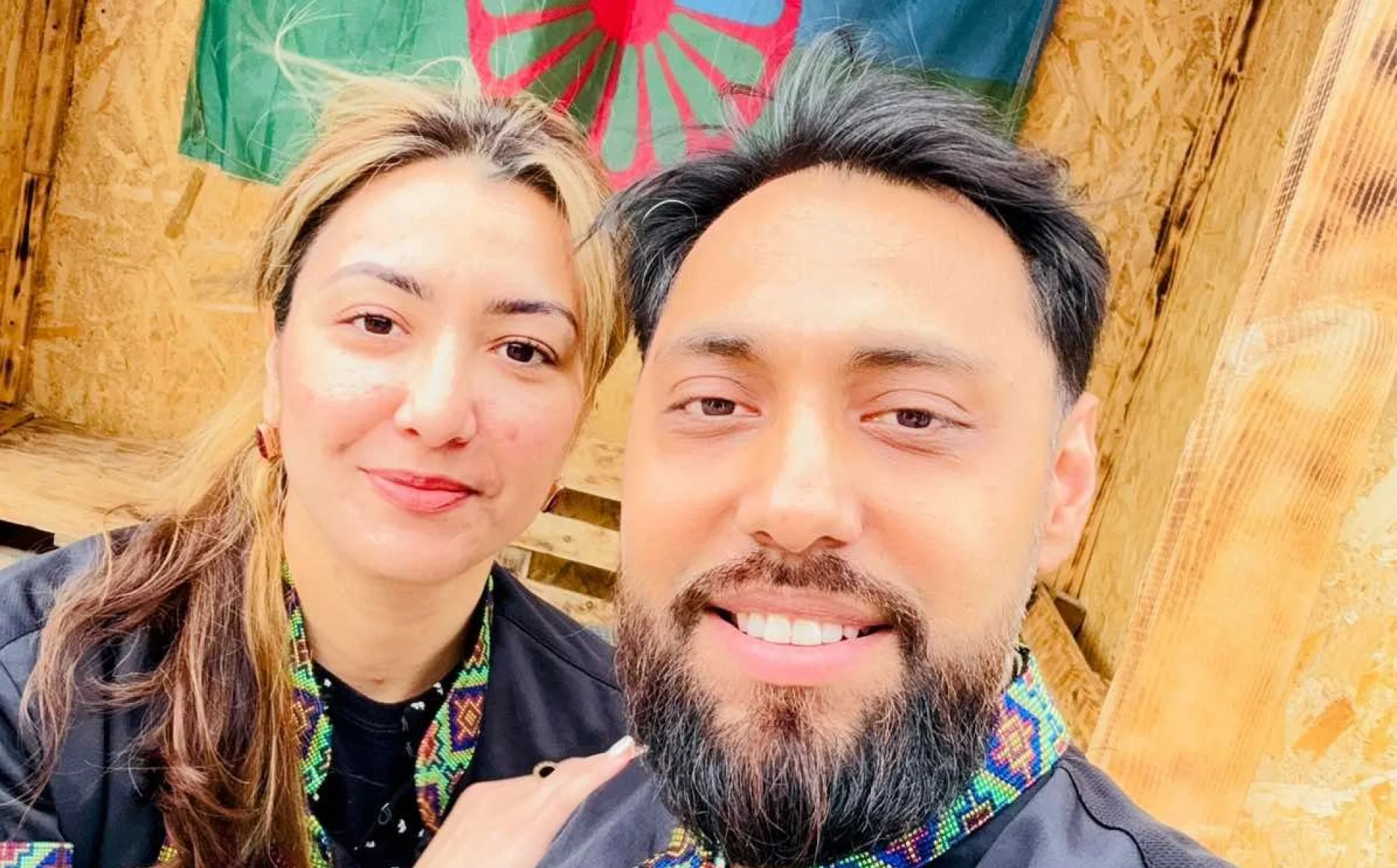
Nicolai Stoian and Marina Kinu are two inspiring examples from the Roma community who participated in hairdressing courses organised by the National Employment Agency (NEA) with the support of the EU4Youth programme. Their story illustrates how professional training can transform not only individual lives but also entire communities.
From informal trade to a professional career
Before enrolling in the training programme, Nicolai had never held a formal profession. Like many members of the Roma community, he earned a living through small-scale trade.
“I never had a specific profession,” recalls Nicolai. “Most of us were involved in buying and selling goods. Trade can be very unstable. Today, with the war in the region and difficulties at the borders, it has become even more complicated. Honestly, I never imagined I would become a hairdresser.”
Yet the profession appealed to him more than he initially realised.
“I have always been attracted to creativity. I liked hairstyles, haircuts, and different styles. Even though I never thought about pursuing it professionally, the interest was always there.”
For Marina, the opportunity came as a natural continuation of a long-standing passion. As a homemaker, she had spent years experimenting with hairstyles and hair colouring techniques, teaching herself through online tutorials and practicing on women and girls within her community.
“I love colouring hair and highlights,” she says. “I enjoyed practicing with people from our community. When we heard about the courses, we were excited and immediately wanted to participate together.”
The training programme gave both Nicolai and Marina something they never had before: professional skills, structured learning, and an officially recognised qualification.

Learning a profession and building confidence
The hairdressing course was delivered by Maxim Raduca, a 33-year-old instructor who trained approximately 15 Roma participants – six men and nine women. The programme covered men’s haircuts, basic women’s hairstyling techniques, hair colouring, hygiene standards, and workplace safety.
According to Maxim, obtaining a recognised qualification can significantly increase a person’s confidence and employment prospects.
“To be honest, when you have professional training and a diploma, you feel much more confident in your work because you can truly call yourself a specialist,” he explains. “People trust you more when they know you are qualified, and displaying your certificate gives clients additional confidence.”
Maxim believes that vocational training programmes are particularly important for young people because they provide practical pathways to employment and economic independence.
“Not everyone can be included in such initiatives, but there are young people who genuinely want to learn and improve their lives,” he says. “These programmes give them the opportunity to stay in Moldova, build a future here, and achieve something in their own country.”
He also observes significant changes within the Roma community.
“The traditional nomadic lifestyle is becoming part of the past. Young Roma people need to integrate into the communities where they live, continue their education, and find stable employment. They need opportunities to develop professionally and become active members of society.”
A new reality for the Roma community
For Nicolai and Marina, the course offered much more than technical knowledge. It provided a pathway to financial independence and social inclusion.
Upon completion of the programme, participants received certificates formally recognising their qualifications. This opens doors to employment opportunities, internships, or the possibility of launching their own businesses.
For Nicolai, the impact goes beyond his personal experience.
“I can honestly say that what is happening in the Roma community today is a novelty,” he says. “Roma people are learning and they want to work. Beyond trade and traditional activities, we are now talking about professions. This is something new for our community.”
He believes that their example is already inspiring others.
“Other Roma people look at us and they are impressed. I have been living in Moldova for two years, and it is unusual to see a Roma person from Otaci studying a profession and wanting to build a future here at home. People notice this change.”
For many years, stereotypes portrayed Roma communities as disconnected from formal education and employment. Stories like Nicolai and Marina’s challenge these perceptions and demonstrate the growing aspirations of younger generations.
Community support makes change possible
The success of the initiative would not have been possible without local community engagement.
Alexei Preda, community mediator and president of the non-governmental organisation (NGO) ‘Bahtalo Ker’, played a key role in identifying participants and organising the training process.
“I am constantly asked when similar courses will be organised again”, says Alexei. “Not everyone can afford to travel to Bălți or Chișinău. Many already have families and young children. In the Roma community, people often start families at a younger age, so they carry significant responsibilities.”
The demand for vocational training far exceeded available places.

“Approximately 70 people expressed interest in participating”, he says. “Unfortunately, due to funding limitations, we could only accommodate 15 participants in tailoring courses and 15 participants in hairdressing courses.”
The NGO ‘Bahtalo Ker’ provided its fully equipped training facilities free of charge. The salon had originally been established through a social initiative that offered free hairdressing services to refugees from Ukraine.
“The equipment remained available, and we believe it should continue serving the community”, says Alexei. “That is why we offered the space for these courses, allowing young people to learn a profession with the financial support of EU4Youth.”
The organisation also possesses equipment for tailoring training and plans to continue supporting vocational education opportunities whenever resources become available.
Overcoming challenges and breaking stereotypes
The Roma community in Moldova continues to face significant challenges, including limited access to stable employment, discrimination, and persistent social stereotypes.
Nicolai speaks openly about experiences of exclusion in the labour market.
“There were times when we were refused jobs simply because we are Roma”, he says. “It is clear discrimination. But through these courses, we have changed our lives and can now offer a positive example.”
He believes that initiatives like EU4Youth are helping improve relationships between Roma communities and wider society.
“These projects change how Roma people and Moldovans see each other”, explains Nicolai. “Young people see that we can have professions, work, pay taxes, and contribute to society. We are showing a different image of our community.”
Such changes may appear gradual, but they have the potential to create lasting impact. As more young Roma gain qualifications and enter the labour market, they challenge misconceptions and create new opportunities for future generations.
Looking ahead
For Nicolai and Marina, receiving their certificates is only the beginning. Beyond learning a profession, the course gave them something immediately practical: the confidence to start offering services in their own community, their first clients, and the possibility to turn their skills into income for their family.
Today, they are already applying the skills they acquired during the training. Marina has started providing haircuts and hair services within her community, while continuing to develop her expertise.
“I have learned how to perform haircuts and gained practical experience”, she says. “I already use these skills at home and in the community. Even my husband is one of my regular clients.”
The couple’s long-term ambition is to open their own salon and build a sustainable family business.
“We dream of having our own salon”, says Nicolai proudly. “We want to become an example for young people in our community and show that Roma people can learn, work, and succeed.”
Marina shares the same vision.
“It is important to have a profession – for our future and for the future of our children”, she says. “We want them to understand that education and work are key to a better life.”
The impact of EU4Youth programme
By providing practical skills, professional certification, and opportunities for economic inclusion, EU4Youth and the NEA are helping vulnerable young people build stable futures while contributing to broader social change.
Having spent much of his life abroad, Nicolai says he always dreamed of building a life in his hometown.
“I have lived in many different countries, but I have always wanted to live at home, in the town where I grew up and where my family lives. If we had more jobs here, many people would not have to leave.”
Through their determination, newly acquired skills, and aspirations for the future, Nicolai and Marina represent a new generation of Roma citizens investing in education, employment, and community development. Their journey demonstrates that when opportunities are available, individuals can transform their lives – and inspire entire communities to do the same.